Cooking tips
La Cuisine Niçoise
An introduction to la cuisine niçoise: how mountains, history and thrift shaped the cooking of Nice, its essential ingredients and its signature dishes.
Published · Updated
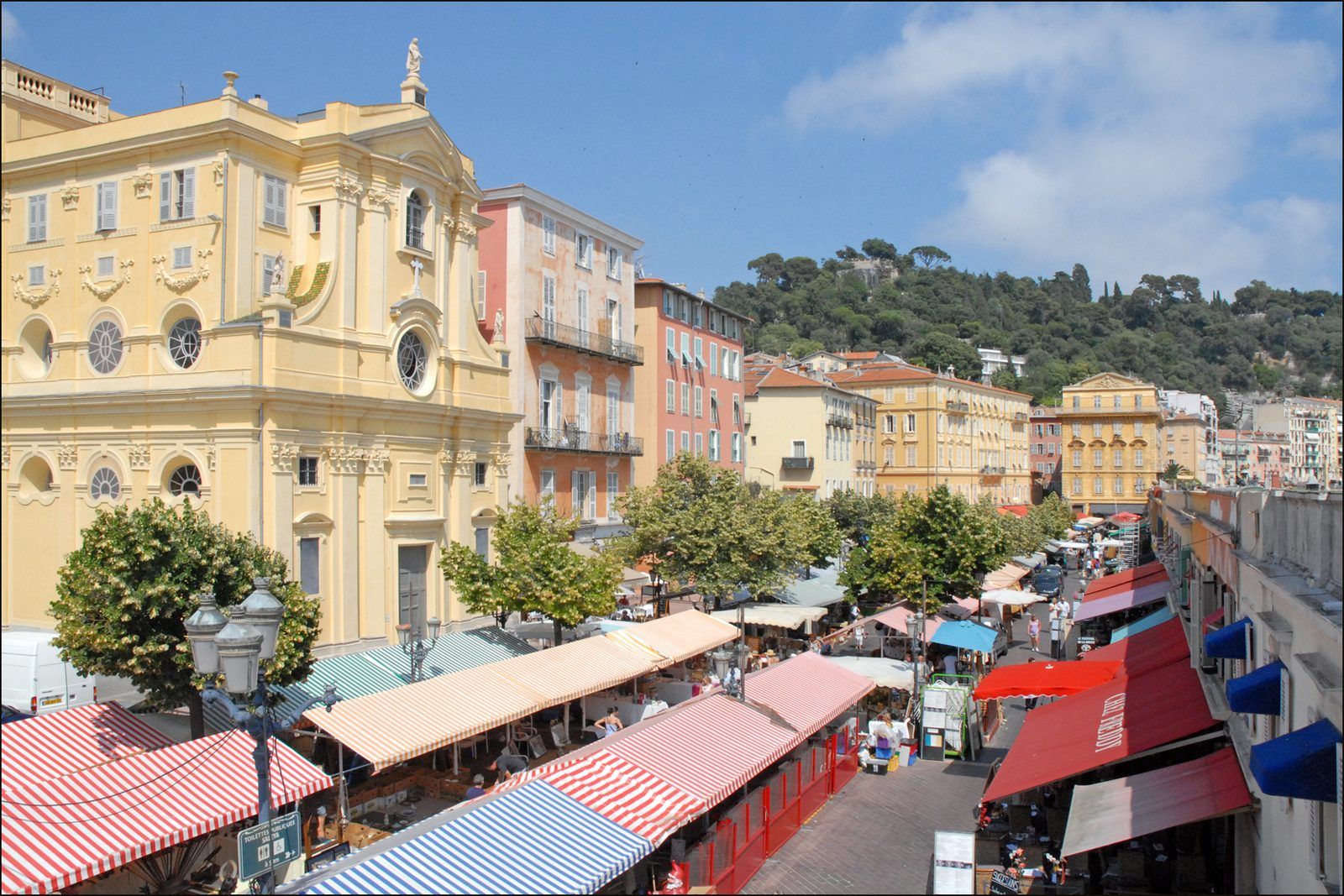
Ask someone in Nice what makes their cooking different and the answer is rarely about technique. It is about a place, and about making do. La cuisina nissarda, as it is called in the Niçois language, grew out of a narrow strip of coast and a hinterland of steep valleys where good land was scarce and nothing could be wasted. The result is one of the most distinctive regional cuisines of France — light, vegetable-led, fragrant with olive oil and basil — and one that still owes as much to Genoa as to Paris.
A cuisine shaped by geography
The old County of Nice (Comté de Nice) stretched from the sea up into the Southern Alps, between the river Var to the west and what is now the Italian border to the east. Behind the city, the land rises quickly: the valleys of the Vésubie, the Tinée, the Roya and the Paillon cut deep folds into the mountains, and villages cling to ridges and hilltops. For centuries many of these valleys were hard to reach, and each small basin had to feed itself from what it could grow on terraced hillsides.
That shaped everything. Cattle pasture was rare, so butter and cream played almost no part in the kitchen; olive trees, which grow on poor, stony slopes, provided the fat. Meat was for feast days. What people ate every day came from the kitchen garden — chard, zucchini, tomatoes, onions, beans — from the olive grove, and from the sea, which offered anchovies and sardines far more reliably than prized fish.
This is why cooks in Nice have long described their food, with some pride, as une cuisine du pauvre, a cuisine of the poor. It is not a cuisine of poverty in the sense of dullness. It is the cooking of people who had few ingredients and learned to get the most out of each one: stale bread becomes a soup or a stuffing, the leftover meat of a stew becomes the filling of ravioli, the green tops of chard go into a pie, the flowers of the zucchini plant are fried as fritters. The skill lay in turning a handful of modest products into dishes that were varied, generous and full of flavour.
History and influences
Nice’s history explains the rest. In 1388 the city placed itself under the protection of the House of Savoy, and for most of the following five centuries it belonged to the Savoyard state — from 1720, the Kingdom of Sardinia, whose capital was Turin — apart from a period of French rule during the Revolution and the Napoleonic era. Nice only became part of France in 1860, under the Treaty of Turin, confirmed by a plebiscite.
Throughout those centuries the city’s closest neighbours and trading partners were in Liguria, along the coast towards Genoa. You can taste that in the food. Nice shares with Genoa a love of fresh pasta and stuffed ravioli; a pounded sauce of basil, garlic and olive oil (Genoa’s pesto, Nice’s pistou); and a flat chickpea-flour pancake baked in a very hot oven (Genoa’s farinata, Nice’s socca). Chard-filled pies and fritters are common to both sides of the border too.
At the same time Nice sits on the edge of Provence, and it shares many habits with its western neighbour: garlic, wild herbs, the long-simmered daube, a taste for the tomato once it became widespread in the region. Later still, the arrival of winter visitors and hotels in the nineteenth century brought grand-hotel French cooking to the Riviera. Yet the everyday food of Niçois households remained remarkably faithful to its roots.
The essential ingredients
A small number of products appear again and again in Niçoise recipes.
- Olive oil. The foundation of the cuisine. The local olive, the small Cailletier, gives a mild, sweet, slightly almondy oil. The olives themselves, cured and served whole, are the small black-to-brown olives de Nice. Both are protected by a designation of origin.
- Swiss chard (blea in Niçois). Perhaps the most characteristic vegetable of Nice. It goes into pies, both savoury and sweet, into ravioli fillings, stuffings, omelettes and gnocchi. Neighbours have long mocked the Niçois with the earthy nickname caga-blea, a rude reference to how much chard they eat.
- Anchovies and pissalat. Salted anchovies season salads, sauces and tarts. Pissalat — from peis salat, “salted fish” — is a paste of small salted and fermented fish, the traditional topping of pissaladière.
- Garden vegetables and herbs. Tomatoes, zucchini and their flowers, small purple artichokes, fava beans, peppers, young onions (cébettes), eggplants; and above all basil, with garlic, parsley, thyme and bay.
- Chickpea flour. The base of socca, and a cheap, filling staple of the coast.
- Stockfish. Wind-dried cod from northern Europe, long traded around the Mediterranean, is the heart of estocaficada, a strongly flavoured stew with tomatoes, olives, peppers and potatoes. It is an acquired taste and a true Niçois speciality.
- Pasta and dried legumes, which kept well and made small quantities of meat or vegetables go a long way.
Signature dishes
The classic repertoire is broad, but a few dishes define it.
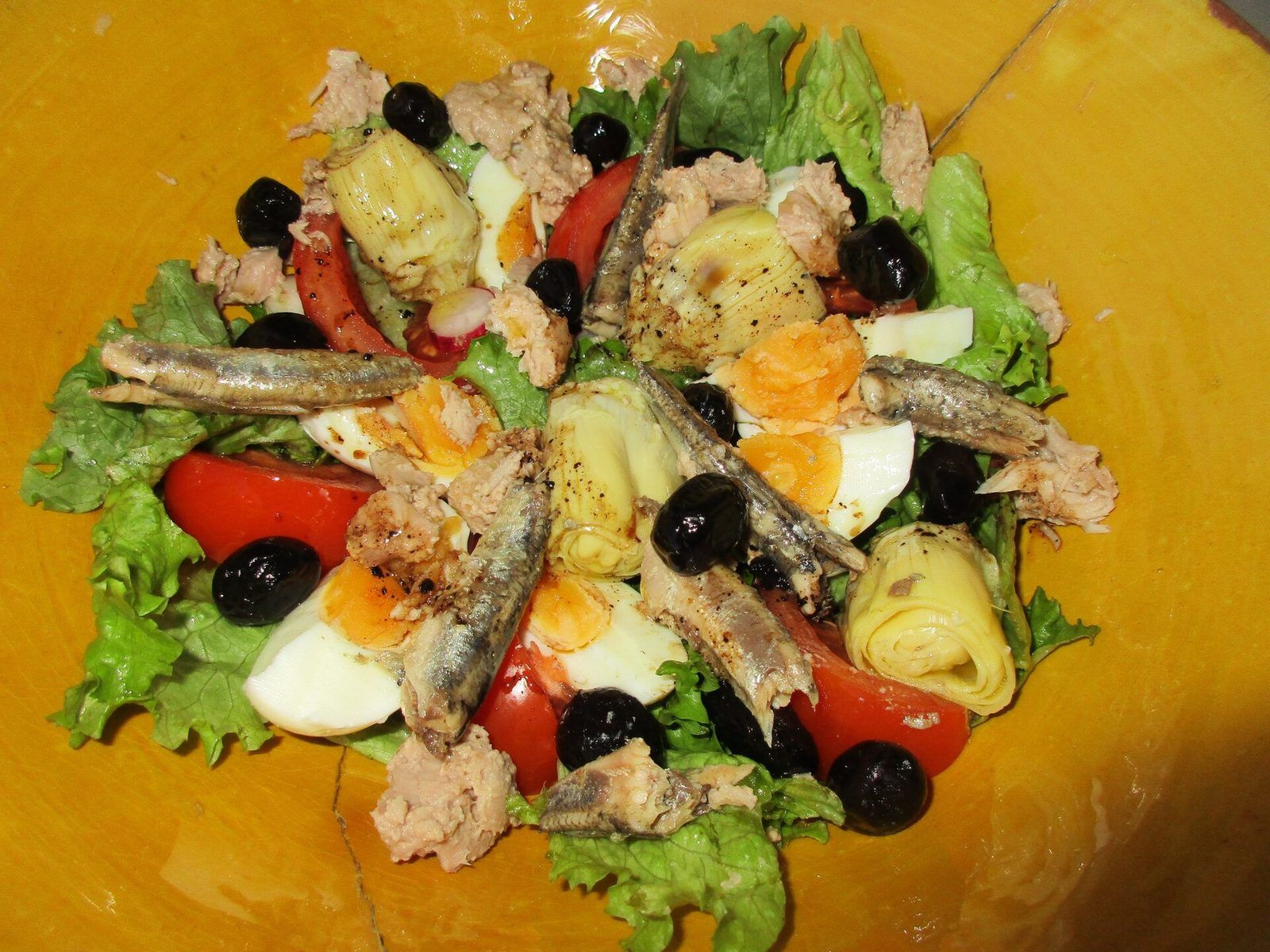
Salade niçoise — la salada nissarda — is a salad of raw vegetables: tomatoes, young onions, peppers, and in spring small artichokes and fava beans, with anchovies or tuna, hard-boiled eggs, olives and olive oil. In Nice it contains no cooked potatoes or green beans.
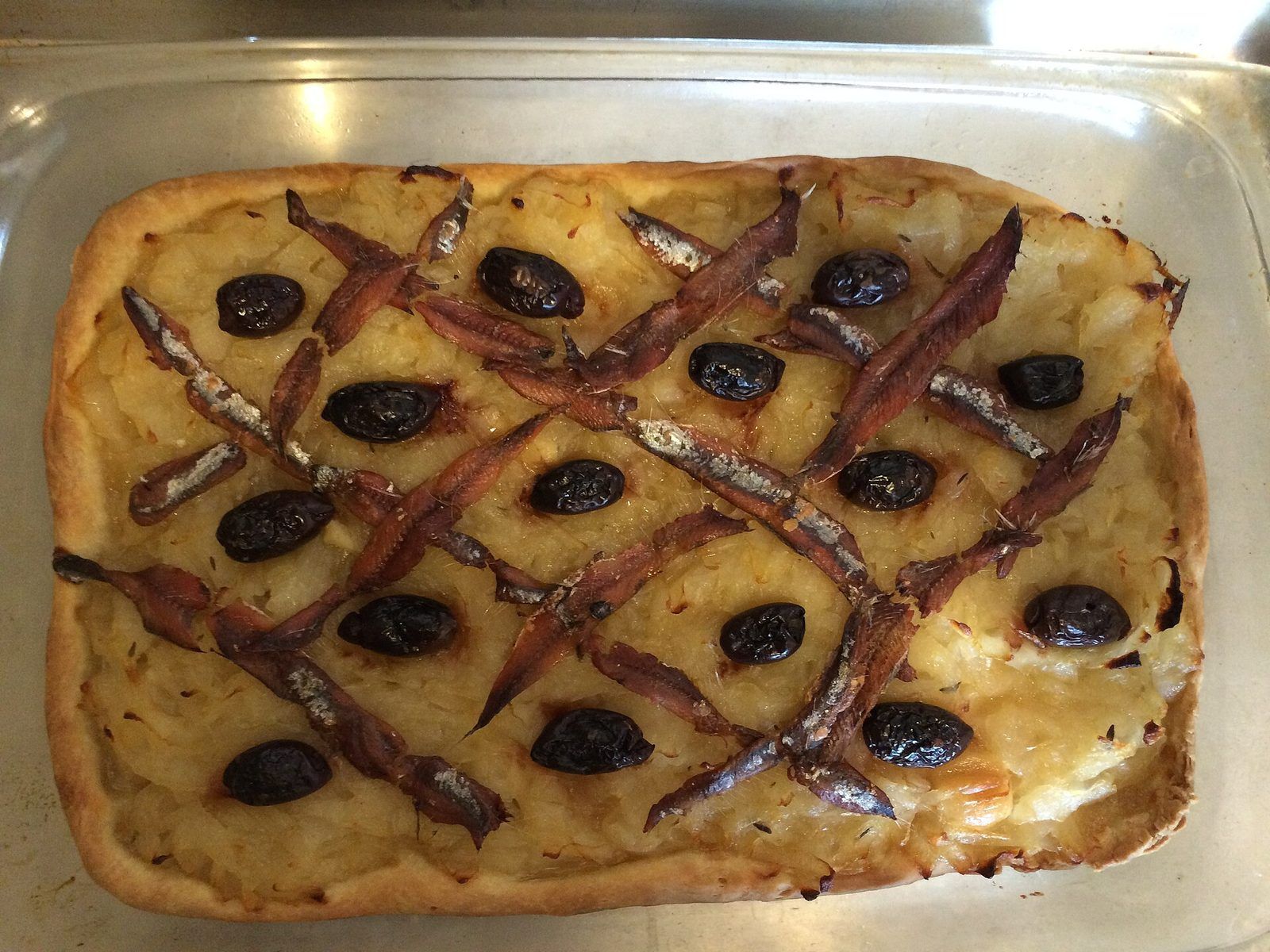
Pissaladière is a thick bread dough covered with onions cooked very slowly in olive oil until soft and sweet, topped with pissalat or anchovy fillets and black olives. Socca, a thin, crisp-edged chickpea pancake cooked in a wide pan in a wood-fired oven, is eaten hot, with plenty of black pepper, straight from the baker or the stall. Pan bagnat — “bathed bread” — is essentially a salade niçoise stuffed into a round bread roll soaked with olive oil.
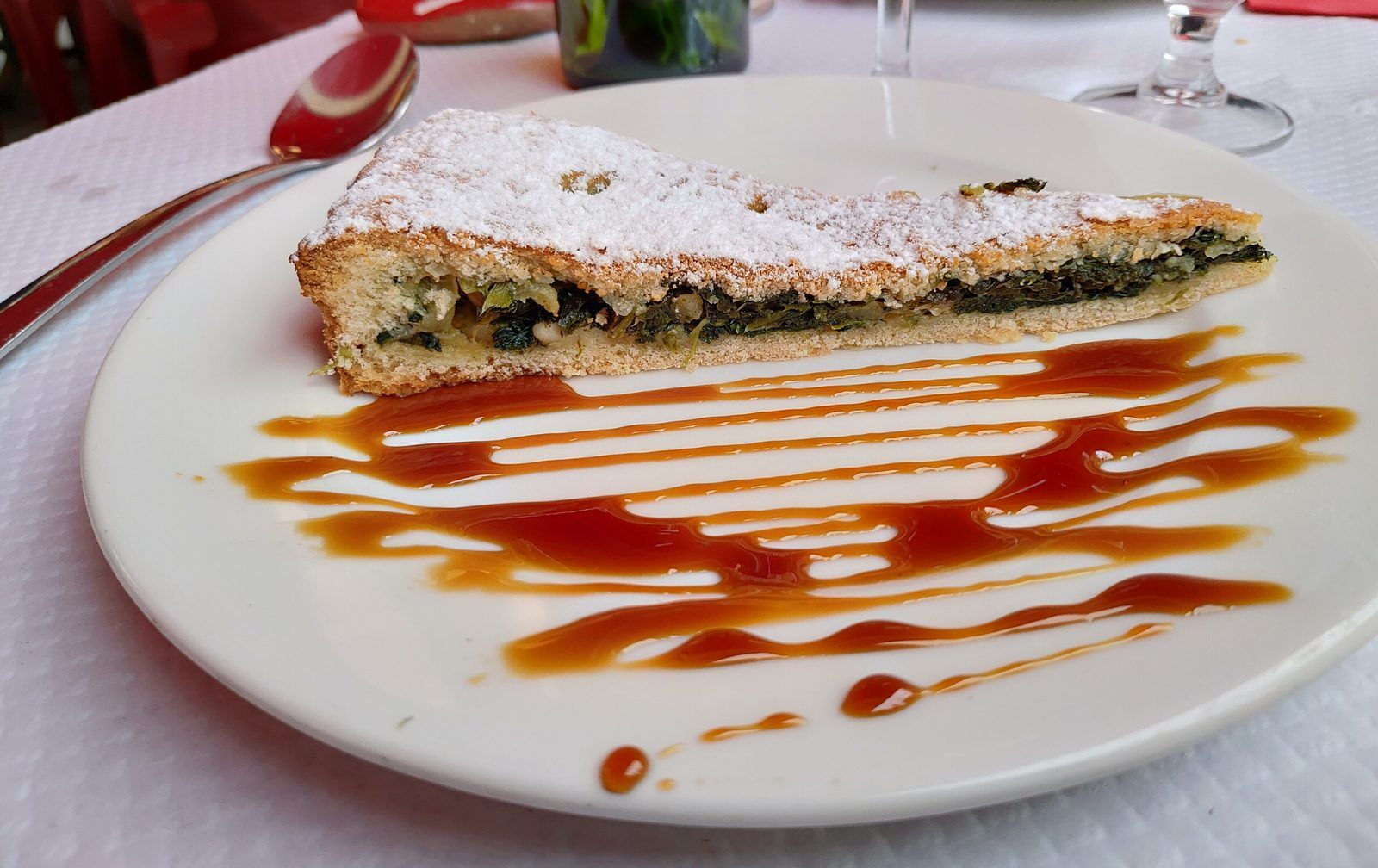
Petits farcis are small stuffed vegetables — tomatoes, zucchini, onions, peppers, eggplants — filled with a mixture that often uses leftover meat, bread, cheese, herbs and garlic, then baked. Tourte de blettes (tourta de blea) surprises visitors: the best-known version is sweet, with chard, pine nuts, raisins and apple in a sugared crust, and it is eaten as a dessert.
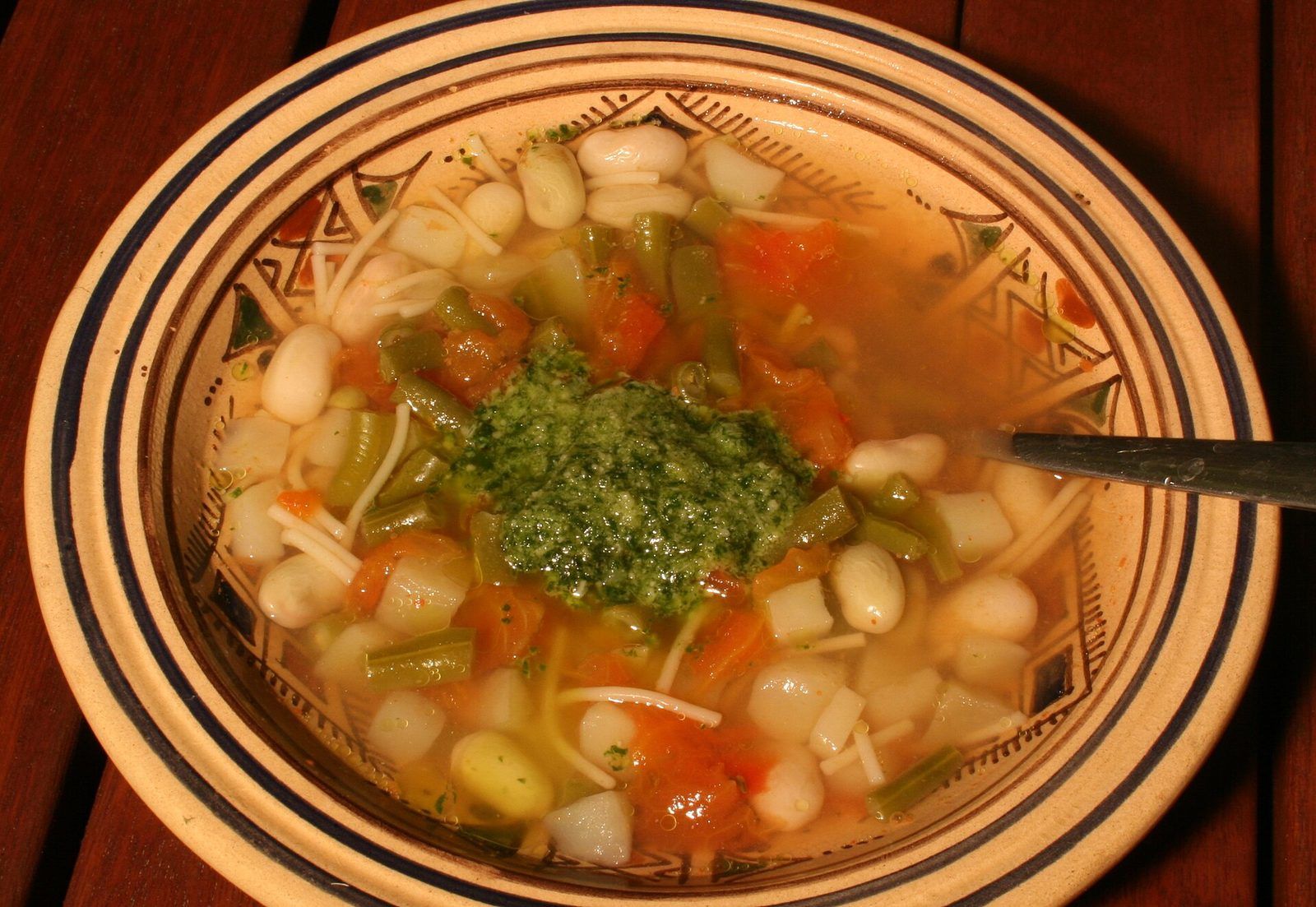
Soupe au pistou is a summer vegetable and bean soup finished with a pounded paste of basil, garlic and olive oil — Nice’s pistou is usually made without the pine nuts of Genoese pesto. At the other end of the scale sits aiga boulida, literally “boiled water”: a simple broth of garlic and sage poured over bread, the humblest soup of all, long credited with restorative powers.
Daube niçoise, beef slowly braised in red wine, is traditionally followed by ravioli, whose filling uses the leftover daube with chard; the ravioli are then served with the daube’s sauce. Among the fried things, zucchini-flower fritters are a summer favourite, and at Carnival time bakeries all over Nice sell ganses, ribbons of fried dough scented with orange-flower water and dusted with sugar. And there is merda de can, green gnocchi made with potato and chard, whose frankly vulgar name — politely, “dog’s mess” — is part of their charm.
Street food and markets
A great deal of Niçoise cooking was, and still is, eaten outdoors and on the go. Socca, pissaladière, pan bagnat and fritters are all food that can be held in the hand, and in the narrow streets of the old town (Vieux-Nice) they are still sold by the slice or by the piece.
The market on the Cours Saleya, between the old town and the sea, is the best place to see the cuisine’s raw materials: bunches of chard and basil, zucchini with their flowers still attached, mesclun salad leaves, local olives, and in season small purple artichokes. The small producers from the surrounding hills sell alongside the traders, and their stalls follow the seasons closely — which is exactly how Niçoise cooking works.
The Cuisine Nissarde label
As Nice became a major tourist destination, “Niçoise” started to appear on menus everywhere, often attached to dishes that had little to do with the local tradition. To help residents and visitors find the real thing, a local association, the Cercle de la Capelina d’Or, created the Cuisine Nissarde label in 1995; today it is managed by the Nice Côte d’Azur metropolitan tourist office. It is awarded to restaurants that serve traditional Niçoise dishes made on the premises from authentic recipes and local, seasonal produce, and it is checked and renewed periodically. Restaurants holding the label display its logo, and the tourist office publishes the list — around thirty restaurants in recent years. It is a useful guide, though many good family kitchens and bakeries in and around Nice simply carry on cooking the old way without any label at all.
Niçoise cooking and its neighbours
It is easy to fold Nice into “Provençal cuisine”, and the two do overlap. Both rely on olive oil, garlic, herbs and summer vegetables; rouille, the garlicky, saffron-tinted sauce served with fish soups, is known along the whole coast. But Provence was part of France from the end of the fifteenth century, while Nice looked east for most of its history. That Ligurian heritage — fresh pasta, socca, chard pies, pistou, the extensive use of chard and chickpea flour — is what gives Niçoise cooking its own identity.
Cooking Niçoise at home
You do not need to live in Nice to cook this way, but a few principles help:
- Follow the season. Niçoise dishes are built around vegetables at their peak. A salade niçoise with pale winter tomatoes misses the point; make a chard pie or a daube instead.
- Use good olive oil generously, and choose it for flavour. It is often the main seasoning, not just a cooking fat.
- Keep it simple. Traditional recipes use few ingredients. Adding more rarely improves them.
- Waste nothing. Stale bread, leftover stew, chard stalks and the last of the herbs all have a place.
- Start with the classics: a salade niçoise in summer, a soupe au pistou when beans and basil are plentiful, a pissaladière any time of year.
Behind all of it is the same idea the old cooks of the County of Nice lived by: with a little oil, a garden and some care, you can eat very well indeed.
Questions & answers
What is Niçoise cuisine?
It is the traditional cooking of Nice and the old County of Nice, in the far south-east of France. It is a frugal, vegetable-led Mediterranean cuisine built on olive oil, garden produce, herbs, anchovies and chickpea flour, with strong links to neighbouring Liguria in Italy.
What are the most typical Niçoise dishes?
Salade niçoise, pissaladière (onion tart), socca (chickpea pancake), pan bagnat, petits farcis (stuffed vegetables), tourte de blettes (Swiss chard pie), soupe au pistou, daube with ravioli, and fritters such as zucchini-flower beignets and the ganses eaten at Carnival.
What is the Cuisine Nissarde label?
Cuisine Nissarde is a quality label for restaurants that serve authentic, home-made Niçoise dishes. It was created in 1995 by a local association and is now run by the Nice Côte d’Azur tourist office. Look for its logo on the door or menu.
How is Niçoise cooking different from Provençal cooking?
The two share olive oil, garlic, herbs and sun-ripened vegetables. But Nice spent most of its history outside France, looking towards Genoa and Turin, so its cooking has a distinctly Ligurian side — fresh pasta and ravioli, chickpea socca, pistou without pine nuts, Swiss chard in almost everything — that the rest of Provence does not share to the same degree.