Soups
Aïga boulida (garlic and sage soup)
L’aïga boulida
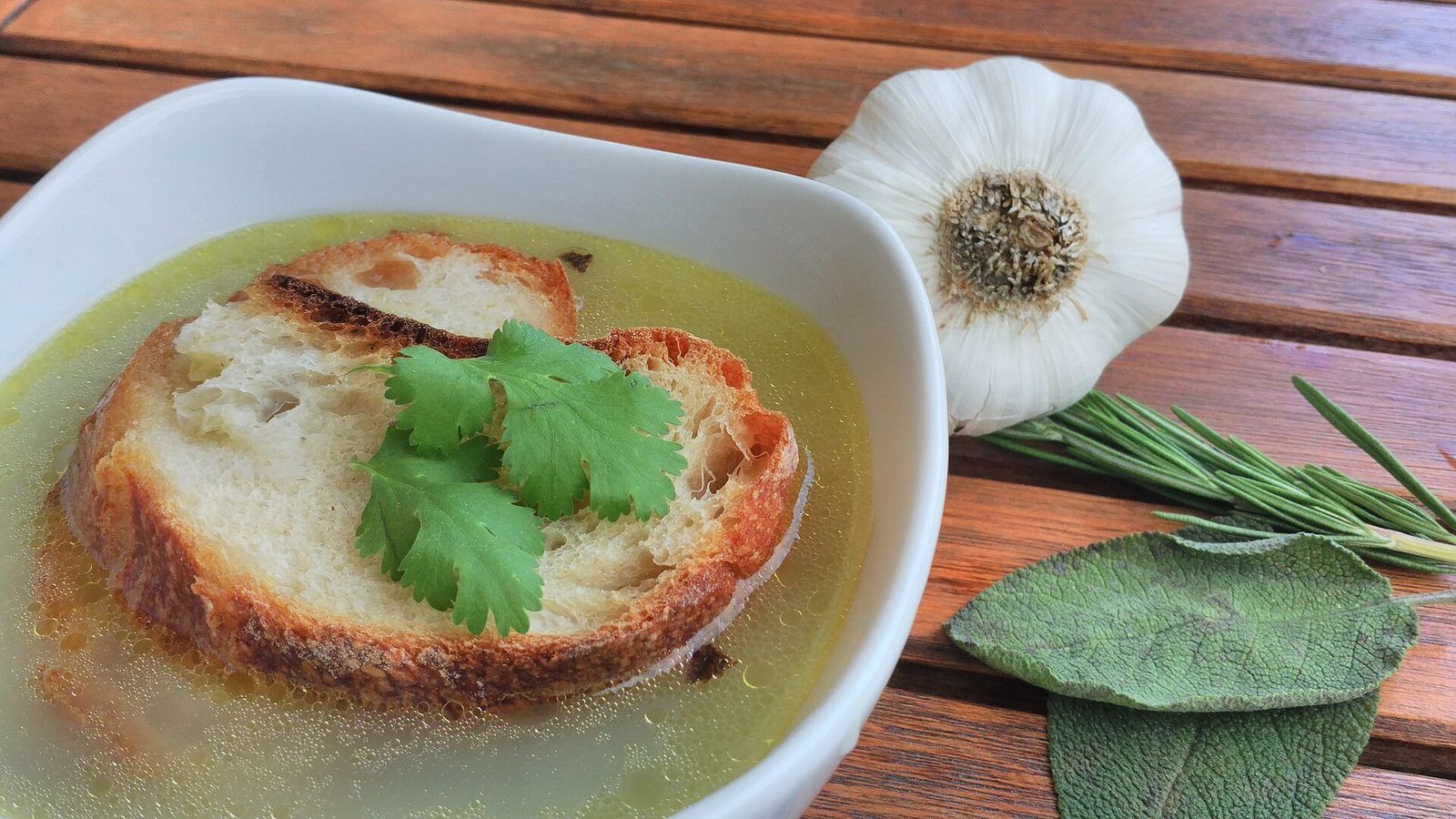
Aïga boulida, the garlic and sage broth of Nice poured over stale bread with olive oil — a 20-minute restorative soup, with an optional egg yolk or poached egg.
Published · Updated
- Prep
- 5 min
- Cook
- 20 min
- Total
- 25 min
- Serves
- 4
- Difficulty
- Easy
Method
Put the water, garlic, bay leaf if using and salt in a saucepan. Bring to the boil and simmer gently for 15 minutes, until the garlic is soft.
Add the sage leaves, take the pan off the heat and leave to infuse for 5 minutes. Taste and adjust the salt.
Strain the broth back into the pan, or simply lift out the sage and bay leaf if you like to keep the soft garlic in the soup.
Meanwhile, place two slices of stale bread in each soup bowl, or toast fresh bread until dry. Drizzle each bowl with 1 tbsp olive oil.
For a richer soup, beat the egg yolks in a tureen, then whisk in a ladle of the hot (not boiling) broth, followed by the rest. Do not reheat once the yolks are in.
For poached eggs instead, bring the broth back to a bare simmer, slip in the eggs one by one and poach for 3 minutes.
Pour the broth over the bread, add a poached egg to each bowl if using, grind over some pepper and serve at once.
Tips
- Add the sage at the end. Boiled for a long time it turns bitter and medicinal.
- Crush the soft garlic cloves onto the bread with a fork for a fuller flavour.
- For a more substantial version, cook a handful of vermicelli in the broth for the last few minutes instead of using bread.
Watch it being made

Aïgo boulido de Michel - Les Carnets de Julie — Les Carnets de Julie - France Télévisions (YouTube). The player loads only when you press play.
Boiled water that saves lives
L’aïga boulida means simply “boiled water”. It is probably the plainest soup of Nice and Provence: water, garlic and sage, poured over stale bread with a thread of olive oil. Yet it holds a special place in local kitchens, as a well-known proverb shows: l’aïga boulida sauva la vida — “boiled water saves life”.
The saying reflects the soup’s traditional role. Aïga boulida was the dish of the day after a feast, of winter colds and of convalescence, when the stomach wanted something light. Garlic has long had a reputation as a cure-all in Mediterranean folk medicine, and sage owes its Latin name, salvia, to a root usually linked with health and healing. None of this makes the soup a medicine, but it is easy to see why it is so comforting.
Choosing the ingredients
With so few ingredients, each one matters.
- Garlic: use plenty. Simmered for 15 minutes, it loses its bite and becomes sweet and soft. New-season garlic is especially mild; with older bulbs, remove any green shoot.
- Sage: fresh sage is essential. Dried sage gives a dusty, harsh taste. A sprig from the garden or a pot on the balcony is ideal.
- Bread: a firm country loaf, two or three days old. It soaks up the broth without collapsing. Fresh bread can be dried in the oven or toasted.
- Olive oil: the only fat in the soup, added raw at the end — choose a good extra-virgin oil.
Variations
Every household has its own version. Some cooks add a bay leaf, a sprig of thyme or a pinch of herbes de Provence to the broth, though sage should always dominate. Egg yolks whisked into the broth give it a silky, richer texture; a poached egg in each bowl turns it into a light supper. A little grated cheese over the bread is common, and replacing the bread with vermicelli cooked in the broth makes a soup that is easier to eat for children or invalids.
Garlic lovers can go further and spread the toasted bread with a spoonful of rouille before pouring the broth over it — not traditional for this soup, but in the same spirit as the fish soups of the coast.
When to serve it
Serve aïga boulida as a light evening meal, after a rich lunch, or whenever you want something warming and quick: it takes about twenty minutes from start to finish. In summer, when the garden is full, the richer soupe au pistou takes its place.
Questions & answers
What does aïga boulida mean?
It means "boiled water" in the Niçois and Provençal languages. The name reflects how simple the soup is — water made into a meal with garlic, sage, olive oil and bread.
Is aïga boulida really good for you?
It has long been a traditional home remedy, eaten after a heavy meal, during a cold or while convalescing. It is light, warming and easy to digest, but it is comfort food, not medicine.