Lunch
Trouchia
La trouchia
Trouchia is Nice's thick Swiss chard omelette with onion and hard cheese, cooked slowly in a pan and eaten hot, warm or cold. The label recipe.
Published
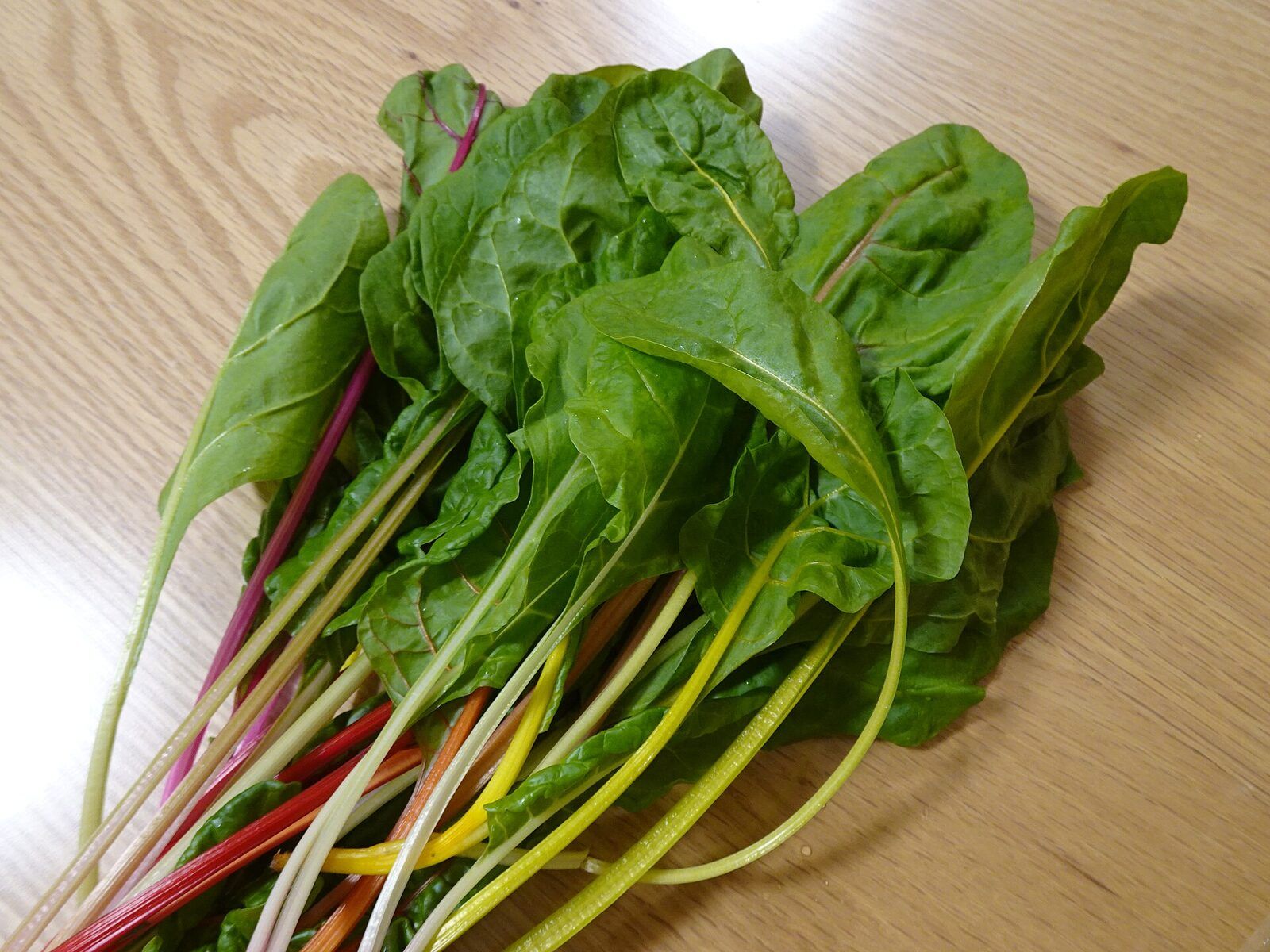
- Prep
- 30 min
- Cook
- 35 min
- Total
- 1 h 5 min
- Serves
- 4
- Difficulty
- Medium
Method
Cut the chard leaves into strips about 1 cm wide. Rinse them 2 or 3 times in cold water to take away any bitterness, then drain well.
Dice the onion and chop the garlic. Soften both in 1 tablespoon of olive oil in a 28 cm (11 in) frying pan until the onion is soft and pale golden. Tip into a large bowl.
Beat the eggs in the bowl with the onion. Stir in the cheese and the chard, and season with salt and pepper. The cheese is salty, so go easy on the salt.
Heat 2 tablespoons of olive oil in the same pan over moderate heat, even if it is nonstick. Pour in the mixture.
Turn the heat to low. Press the mixture down firmly with a wooden spatula until it is 2 to 3 cm thick. The chard will shrink by about half as it cooks. Do not let the underside stick.
After about 20 minutes, when the top begins to set, put a plate wider than the pan over it and turn the omelette out. Oil the pan again with the last tablespoon of oil and slide the omelette back in.
Cook 15 more minutes over medium heat, without a lid. Push a knife tip into the middle; it should come out dry.
Slide the trouchia onto a plate. Serve hot, warm or cold.
Tips
- Squeeze the water out of the chard if you blanch or wilt it first. Wet chard makes a wet omelette.
- Pack and press the mixture while it cooks. The label asks for a layer 2 to 3 cm thick, not a loose pile.
- A smaller pan gives a thicker trouchia. The chef Julia Sedefdjian uses a 21 cm pan for 8 eggs and a single bunch of chard.
- Turn it with a plate wider than the pan, as France Inter's François-Régis Gaudry does, or with a serving dish as the label does.
Watch it being made

La trouchia, l'omelette idéale pour le pique-nique - Les recettes de François-Régis Gaudry — France Inter (YouTube). The player loads only when you press play.
Trouchia, Nice’s Swiss chard omelette
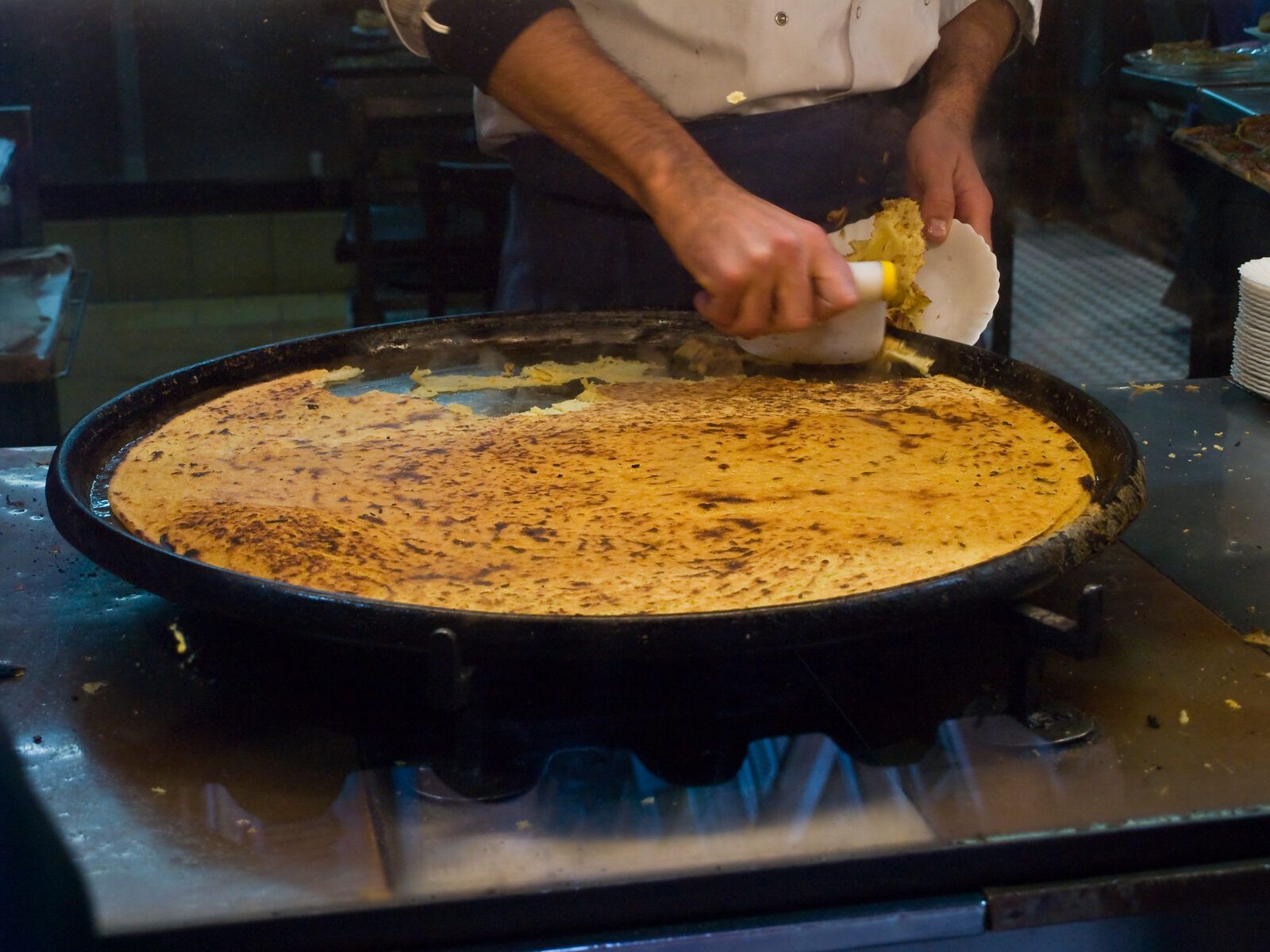
Trouchia is a thick omelette of Swiss chard, eggs, onion and grated hard cheese, cooked slowly in a pan until it is set right through. It is not a runny omelette. François-Régis Gaudry, presenting it on France Inter, compares it to a tortilla with herbs. The name is also spelled trucha (the Cuisine Nissarde label’s spelling) and troucha.
Gaudry also repeats the story that peasants took it to the fields, because it can be eaten hot or cold, which earned it the nickname “omelette of the harvesters”. The Cuisine Nissarde label, awarded by the Nice Côte d’Azur tourist office to restaurants serving real Niçoise dishes, publishes the reference recipe: 1 kg of chard leaves for 6 eggs in a 28 cm pan. Our guide to Niçoise cooking puts it in the wider repertoire.
How cooks in Nice make trouchia
The base is always chard, eggs and cheese. The differences are in how the chard is prepared, how much cheese goes in and which herbs.
| Version | Chard | Eggs and cheese | Extras |
|---|---|---|---|
| Cuisine Nissarde label | 1 kg of leaves, raw, strips of 1 cm | 6 eggs, 100 g Parmesan or Sbrinz | Onion and garlic, 28 cm pan, 20 + 15 min |
| Julia Sedefdjian (France Inter, 2022) | 1 bunch, wilted in the pan first | 8 eggs, 20 g Parmesan | Sweet onion, garlic, basil, 21 cm pan, lid |
| Jeanine Planel, Levens (France 3, 2019) | Blanched 4 min, squeezed in a cloth | 6 eggs, 50 g Parmesan | Onion, parsley, bacon cubes |
| Midi en France (France 3, 2016) | 1 kg of leaves, wilted dry, pressed | 6 eggs, 100 g Parmesan | Parsley, optional basil, 75 g pine nuts, mesclun |
The label’s main method cooks the raw chard inside the omelette, slowly, pressing it down with a spatula. Its variants blanch or wilt the chard first, add 50 g of toasted pine nuts, or add chervil or parsley. Sedefdjian, a chef of Niçois origin cooking in Paris, wilts onion, garlic and chard in the pan before pouring the eggs over them, covers the pan for about 10 minutes and turns it. Gaudry adds that Nice argues over garlic or onion; the label keeps both. Planel, cooking in Levens in the Alpes-Maritimes, adds bacon, and France 3 presents her version as a winter dish.
Ingredients and substitutes
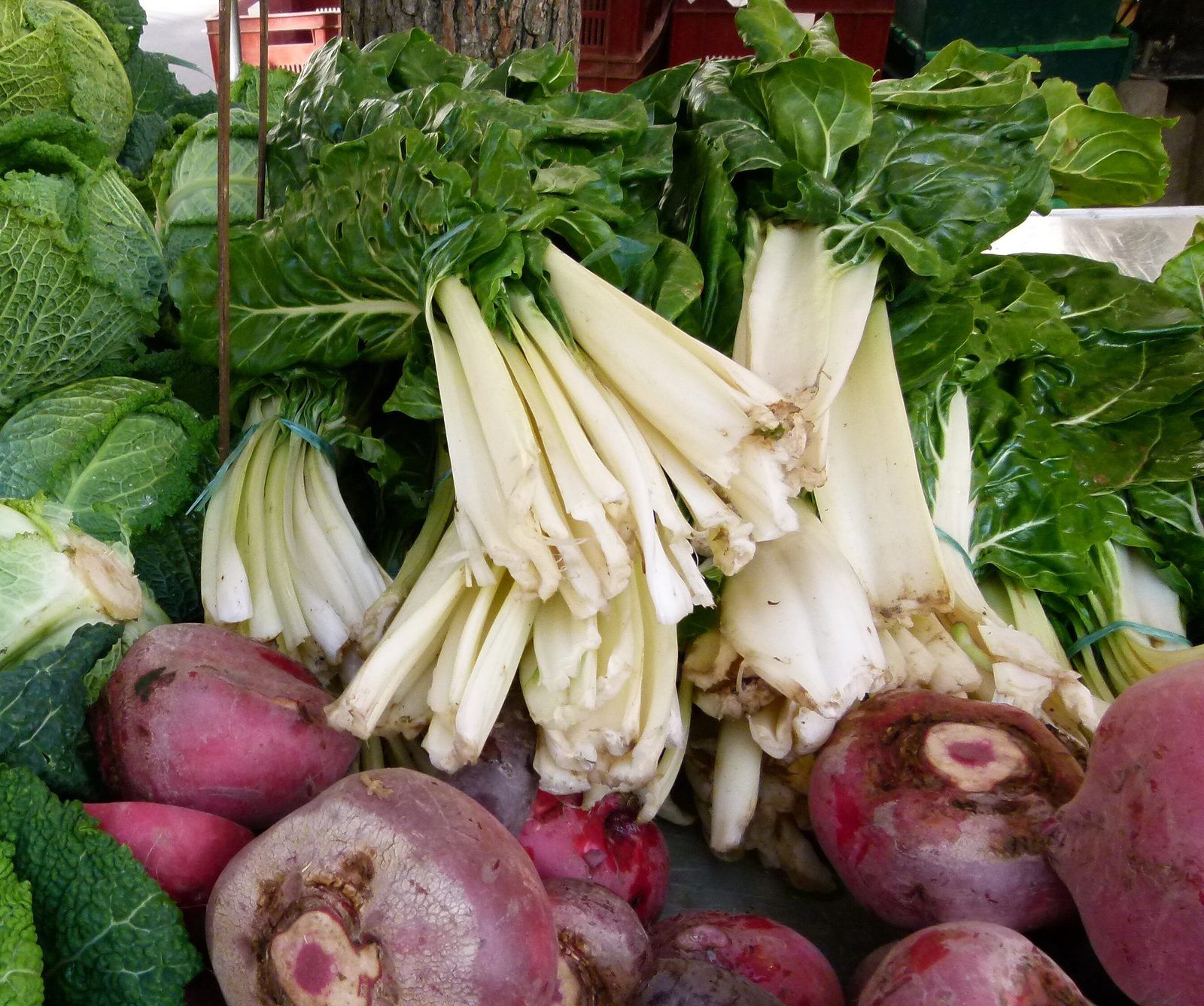
Use chard leaves. The label separates the green from the ribs, and Laurence Duperthuy, who teaches Niçois cooking in La Colle-sur-Loup, specifies small chard with fine ribs. A kilo of leaves looks enormous in the bowl but shrinks by about half. Save the ribs for grilled chard stems with anchovy vinaigrette.
For cheese, the label names Parmesan or Sbrinz, a hard Swiss cheese. The amounts in the sources range from 20 g to 150 g for 6 to 8 eggs, so 100 g is a middle path. Parsley, chervil and basil all appear in Niçois versions, and the label says the dish is already very good without herbs if the chard is of high quality.
Cooking trouchia at home
A trouchia needs a deep, wide pan, a wooden spatula and a plate larger than the pan. The 28 cm pan holds 1 kg of leaves with 6 eggs. Use a smaller pan and fewer eggs for a thicker, smaller omelette.
The delicate moment is the turn. The label says the omelette must not stick while it takes a good colour, so the pan is oiled generously and again before the second side. Test it as Gaudry does, with a knife tip pushed into the middle.
Serving trouchia
The label serves trouchia hot. Gaudry also serves it cut in cubes at the aperitif, and Midi en France accompanies it with a mesclun salad. It keeps its shape when cold, which is why it travels well for a picnic. For another Niçois chard dish, see the sweet tourte de blettes.
Questions & answers
Can I eat trouchia cold?
Yes. The Cuisine Nissarde label recipe serves it hot, but France Inter's François-Régis Gaudry says it is just as good warm or cold, and cut into cubes it works as an aperitif snack or picnic food.
Is trouchia the same as the Niçois chard pie?
No. The tourte de blettes is a pie with pastry, while trouchia is an omelette: chard, eggs, cheese and onion cooked in a pan with no crust.
Can I use the chard ribs?
The label recipe uses the leaves only. Gaudry says mostly the green is used but a few ribs are allowed. The ribs are better cooked separately, for example in grilled chard stems with anchovy vinaigrette.
Sources
- Cuisine Nissarde label recipe: La Trucha, l'omelette niçoise aux blettes (Explore Nice Côte d'Azur)
- France Inter, La trouchia, recipe by Julia Sedefdjian presented by François-Régis Gaudry (YouTube, 2022)
- France 3 Météo à la carte, La troucha, cooked by Jeanine Planel of Levens (YouTube, 2019)
- France 3 Midi en France, La trouchia, omelette aux blettes (YouTube, 2016)
- Laurence Duperthuy, Notes de Cuisine, La Colle-sur-Loup: la trouchia (YouTube, 2020)