Starters
Panisse
Panisse is a chickpea paste cooked thick like polenta, set, cut into sticks and fried. The plain Nice method, with Marseille's garlic version compared.
Published
- Prep
- 10 min
- Cook
- 25 min
- Rest
- 1 h
- Total
- 1 h 35 min
- Serves
- 4
- Difficulty
- Easy
Method
Brush a shallow dish, about 20 x 25 cm (8 x 10 in), with the olive oil.
Put the cold water and the salt in a heavy saucepan. Add the chickpea flour a little at a time, whisking, until there are no lumps.
Set the pan over low heat and whisk constantly until the mixture thickens. Bring it to the boil and cook 3 to 5 minutes, stirring, until it is a thick paste like polenta.
Pour the paste into the oiled dish straight away, level the top with a wet spatula and leave it to cool.
Chill for at least 1 hour, until completely firm. Overnight is fine.
Turn the block out and cut it into sticks 1 to 2 cm (1/2 to 3/4 in) wide, about the size of a finger.
Dust the sticks lightly with chickpea flour.
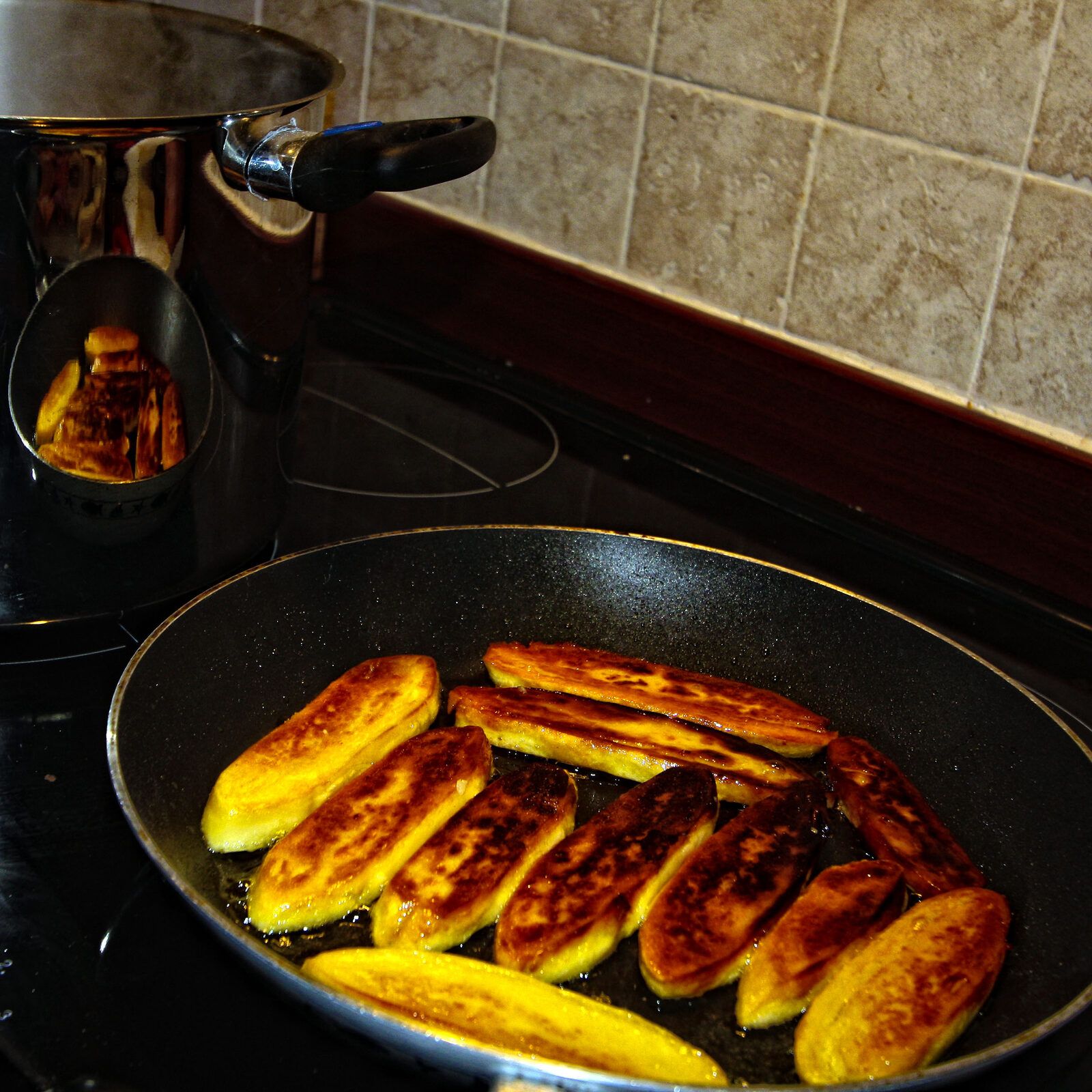
Heat the olive oil in a large frying pan. Fry the sticks in batches, without crowding the pan, turning them until golden on every side, about 8 minutes per batch.
Drain on paper towels, salt at once, add pepper and serve straight away.
Tips
- Whisk the flour into cold water before you apply any heat. This is how the Nice tourist office cookbook starts, and it keeps the paste free of lumps.
- Chill until the block is truly firm. For clean cuts, dip the knife in hot water first, as Michel Portos does.
- Fry in batches and salt as soon as the sticks leave the oil. Panisse is at its best very hot.
- Cook the paste ahead if you like and fry just before serving.
Watch it being made
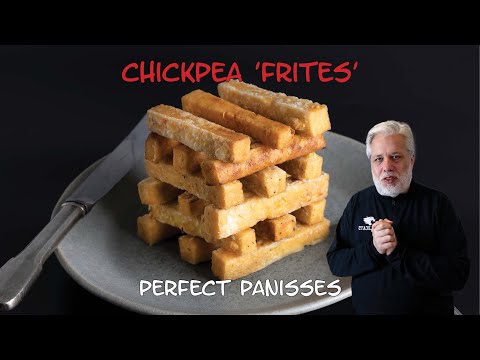
Chickpea French Fries - How to Make Easy Panisses — Pistou and Pastis (YouTube). The player loads only when you press play.
Panisse, chickpea fries from Nice and Marseille
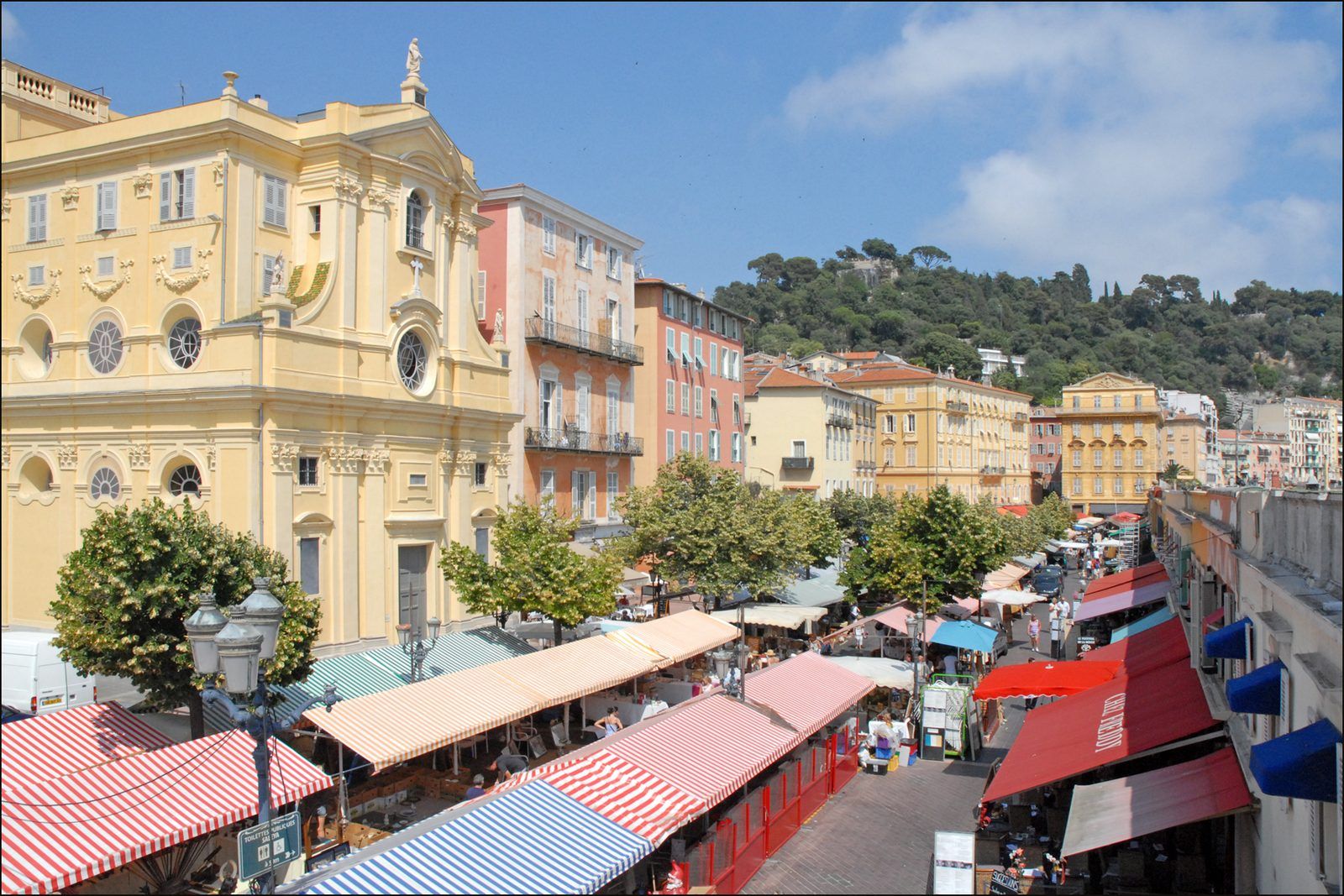
Panisse is a thick paste of chickpea flour, water and salt, cooked like polenta, left to set, cut into fingers and fried until crisp outside and creamy inside. Both Nice and Marseille claim it. The Nice Côte d’Azur tourist office includes a panisse recipe in its cookbook Carnets de cuisine du Comté de Nice, next to a sweet version. In Marseille, the stalls of L’Estaque sell panisses hot in a paper cone, and the district has long said the dish is its own, a claim not everyone accepts.
Marseille’s tourist office says panisse came with Italians from Piedmont and Liguria who worked in the Estaque factories. Food writer Carolyne Kauser-Abbott, who translated the Nice recipes, also calls the origin likely Ligurian, brought by Italian immigrants in the 19th century.
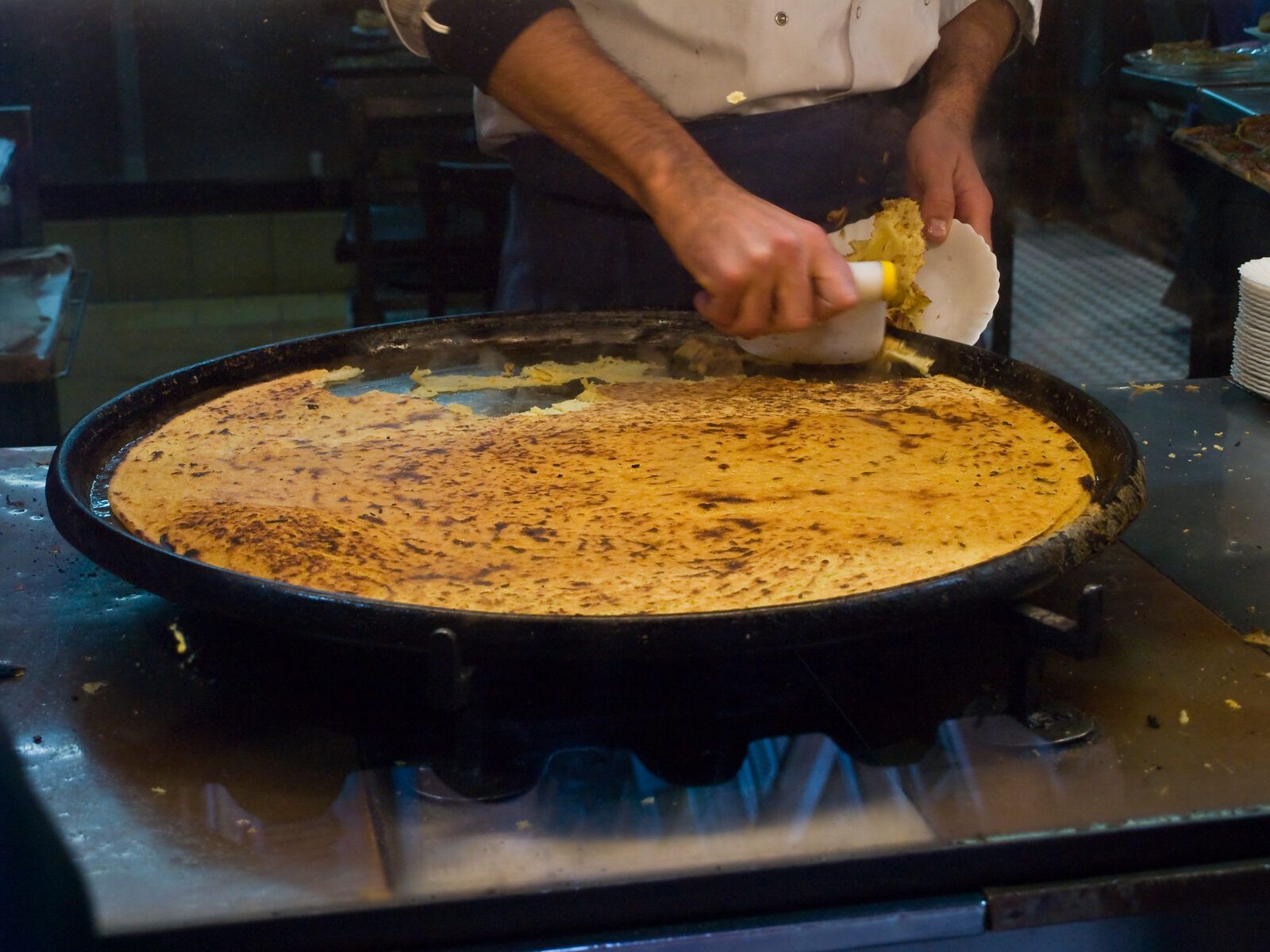
Panisse is a close cousin of socca, the other chickpea street food of Nice. The flour is the same, the method is opposite: socca is a raw batter baked thin in a very hot oven, panisse is cooked first, set and fried. A Marseille local quoted by MyProvence puts it simply: panisses are fried, in Nice they bake the socca. Both belong to the everyday food described in our guide to Niçoise cooking.
How Nice and Marseille cooks make panisse
Panisse is the same paste everywhere. What changes is the water ratio, how the flour goes in and what flavours the pot.
| Version | Flour and water | Method | Flavour | Frying |
|---|---|---|---|---|
| Nice tourist office cookbook | 600 g flour, 2 L cold salted water | Whisked cold, low heat until thick, then boiled 3 to 5 min | None | Olive oil; strips 1 to 2 cm wide, dusted with chickpea flour |
| Cuisine Niçoise TV, Maison Tosello (2014) | 250 g flour, 1 L hot water | Flour and salt mixed dry, hot water added, then cooked | Butter and nutmeg | Olive oil |
| Michel Portos, Marseille-style (2025) | 250 g flour, 1 L water | Flour stirred into half the water, poured into the other half boiling, 5 to 6 min | Two garlic cloves, lifted out; chives to finish | Sunflower or peanut oil |
| Terres OléoPro (2020) | 300 g flour, 1 L water | Flour whisked into boiled water off the heat, 5 min on low heat | One garlic clove and 10 cl olive oil in the water | Olive oil, about 8 min |
The Nice cookbook version is the plainest: flour, salted water, then oil in the pan. Maison Tosello’s video adds butter and nutmeg to the paste. The Marseille-style recipes lean on garlic. Portos boils the cloves in the water and removes them before moulding, so the flavour stays and the cloves do not. He shapes the paste into a log, chills it 2 to 3 hours and slices it with a knife warmed in hot water. Terres OléoPro chills it for at least an hour. Pistou and Pastis lets it set overnight.
Our recipe follows the Nice cookbook ratio, scaled to 250 g of flour. It is stiffer than the roughly 1 litre per 250 g used by Maison Tosello and Portos.
Making panisse at home
You need no special equipment: a saucepan, a whisk, a dish and a frying pan. The one task that takes attention is the paste. Stir it all the time once it heats, because it thickens fast and sticks. Pistou and Pastis cooks it 10 to 15 minutes on low heat.
Pour it into an oiled dish while still hot. Our quantities make a block about 2 cm deep in a 20 x 25 cm dish. Once cut, the sticks fry in 8 minutes or so in a large pan of olive oil, as Terres OléoPro does. Pistou and Pastis deep-fries at 350 °F (about 175 °C).
Short of a frying pan of oil, an air fryer works: Chocmiel gives 210 °C for 8 to 12 minutes, with the trays and the panisse oiled.
Serving panisse
Serve panisse as soon as it is fried. The Nice cookbook says to eat it very hot, with salt and pepper, as an appetizer or a side dish with a green salad. In Marseille it comes by the dozen in a paper cone, with fleur de sel and pepper, eaten standing or on a terrace, or beside tomato sauce or ratatouille.
For dipping, Pistou and Pastis suggests rouille or aioli with harissa, and serves panisse with roast lamb, beef, chicken or seafood. Terres OléoPro pairs it with a mayonnaise of herbs and Greek yoghurt. Panisse and socca make a natural pair for an apéritif: the same flour, one baked, one fried.
Questions & answers
Can I bake or air-fry panisse instead of frying it?
Yes. Chocmiel's recipe gives 210 °C for 8 to 12 minutes in an air fryer, with the trays and the panisse oiled first. Frying in olive oil remains the traditional method.
Are panisses ever sweet?
Yes. The Nice tourist office cookbook has a sweet version, with sugar boiled into the water and icing sugar over the fried sticks. The stalls of L'Estaque in Marseille also sell panisses with sugar instead of salt.
Is panisse gluten-free?
Chickpea flour contains no gluten, so panisse made only with chickpea flour, water, salt and oil is naturally gluten-free. If you avoid gluten strictly, buy flour certified gluten-free, because some is milled alongside wheat.
Sources
- Carnets de cuisine du Comté de Nice (Office de Tourisme Métropolitain Nice Côte d'Azur), panisse recipe translated by Carolyne Kauser-Abbott, Perfectly Provence
- Carolyne Kauser-Abbott, Panisses sucrées, a sweet version (Perfectly Provence)
- Maison Tosello, Comment faire les panisses, Cuisine Niçoise TV (YouTube, 2014)
- Michel Portos, Panisse marseillais, Cuisine M (YouTube, 2025)
- Terres OléoPro, Frites de panisse (YouTube, 2020)
- Pistou and Pastis, Chickpea French Fries (YouTube, 2022)
- Chocmiel, La vraie recette des panisses (YouTube, 2025)
- Office de Tourisme de Marseille, Plate of Panisses Marseillaises
- Pierre Psaltis, Chichis et panisses (MyProvence)
- BFM Marseille, La panisse, spécialité purement marseillaise ? (YouTube, 2022)