Desserts
The 13 desserts of Christmas in Nice
The 13 Christmas desserts as served in Nice: the Provençal core, what Nice adds (fougassette, chard tart, ganses), and a pompe à l'huile recipe.
Published
- Prep
- 30 min
- Cook
- 15 min
- Rest
- 4 h 45 min
- Total
- 5 h 30 min
- Serves
- 6
- Difficulty
- Easy
Method
Crumble the yeast into the lukewarm water and stir in the 200 g of flour. Cover and leave for 45 minutes, until puffy.
Add the olive oil, the remaining 300 g of flour, the sugar, the salt, the orange blossom water and both zests to the starter.
Mix slowly, by hand or with a dough hook, for about 10 minutes, until the dough is smooth and shiny and no longer sticks to the bowl.
Cover and leave to rise for 3 hours in a warm place.
Turn the dough onto a lined baking tray and press it into a round about 30 cm (12 in) across. Cut 5 or 7 slashes with a round-tipped knife and pull them open.
Leave to rise for 1 hour near a source of heat.
Heat the oven to 220 °C (425 °F). Bake for about 15 minutes, until golden. Check from 12 minutes.
Brush the pompe with olive oil as soon as it comes out of the oven, then cool it on a rack.
Tips
- Do not skip the second rise. The Aix tourist office and Château Suau both give a 3-hour first rise and a 1-hour second rise, and the slashes open as the dough puffs.
- Oil goes on twice, in the dough and on the hot crust. The Aix-en-Provence tourist office and ProvenceWeb both brush the pompe with olive oil straight out of the oven.
- Ovens differ. The Aix tourist office bakes a thin 30 cm round at 220 °C for 15 minutes. Château Suau bakes a 3 cm oval at 180 °C for 20 to 25 minutes.
- Dried yeast works too. Château Suau uses one sachet of dried yeast or 15 g of fresh for the same amount of flour.
Watch it being made

Les treize desserts de Noël : l'élaboration de la fougassette à la fleur d'oranger — France 3 Provence-Alpes-Côte d'Azur (YouTube). The player loads only when you press play.
The 13 desserts in Nice: what they are and when they come
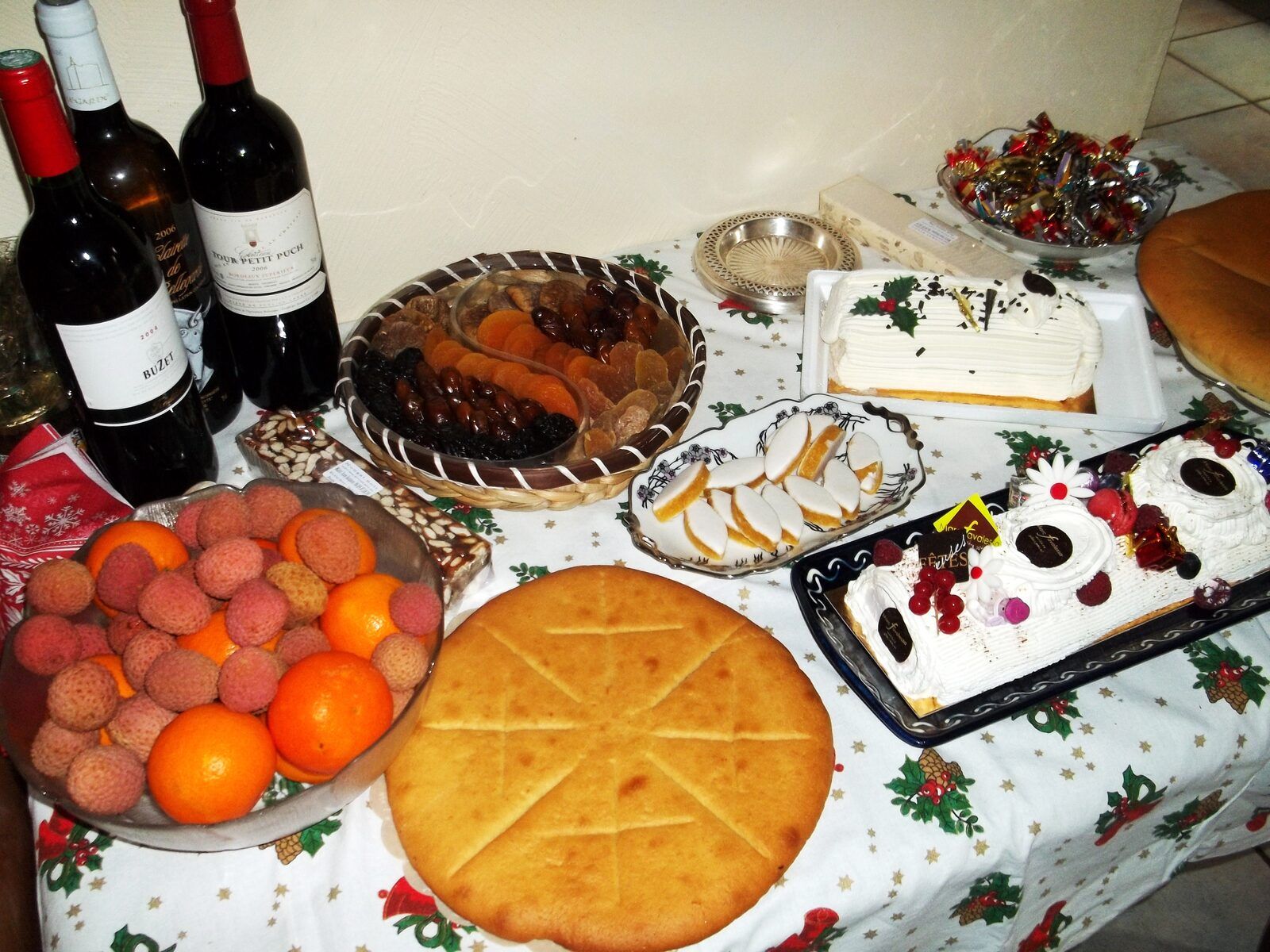
The 13 desserts are a spread of sweets, dried fruit and fresh fruit set on the table on 24 December, after the meatless Christmas Eve supper. In Nice that supper has seven meatless dishes, such as salt cod with leeks, squash gratin and ravioli with walnut sauce. Thirteen stands for Jesus and his twelve apostles.
There is no fixed list. The city of Aix-en-Provence counts up to 55 possible desserts, and the Nice sources say the Niçois list differs from the Provençal one. Sources also disagree on age. Aix says the thirteen desserts are probably of Marseille origin and unknown before the early 19th century. ProvenceWeb traces Christmas sweets back to the 17th century and says the number thirteen only settled in the 20th. Traditionally the table stays set for three days.
The Provençal core and the Nice list
ProvenceWeb and the city of Aix give the same core for Provence. Nice keeps most of it and adds its own pies, tarts and fried pastry.
| Provençal core | Nice | |
|---|---|---|
| Yeast cake | pompe à l’huile | fougassette with orange blossom; pompe optional |
| Pies and tarts | none in the core | chard tart, jam tart, honey and walnut tourte |
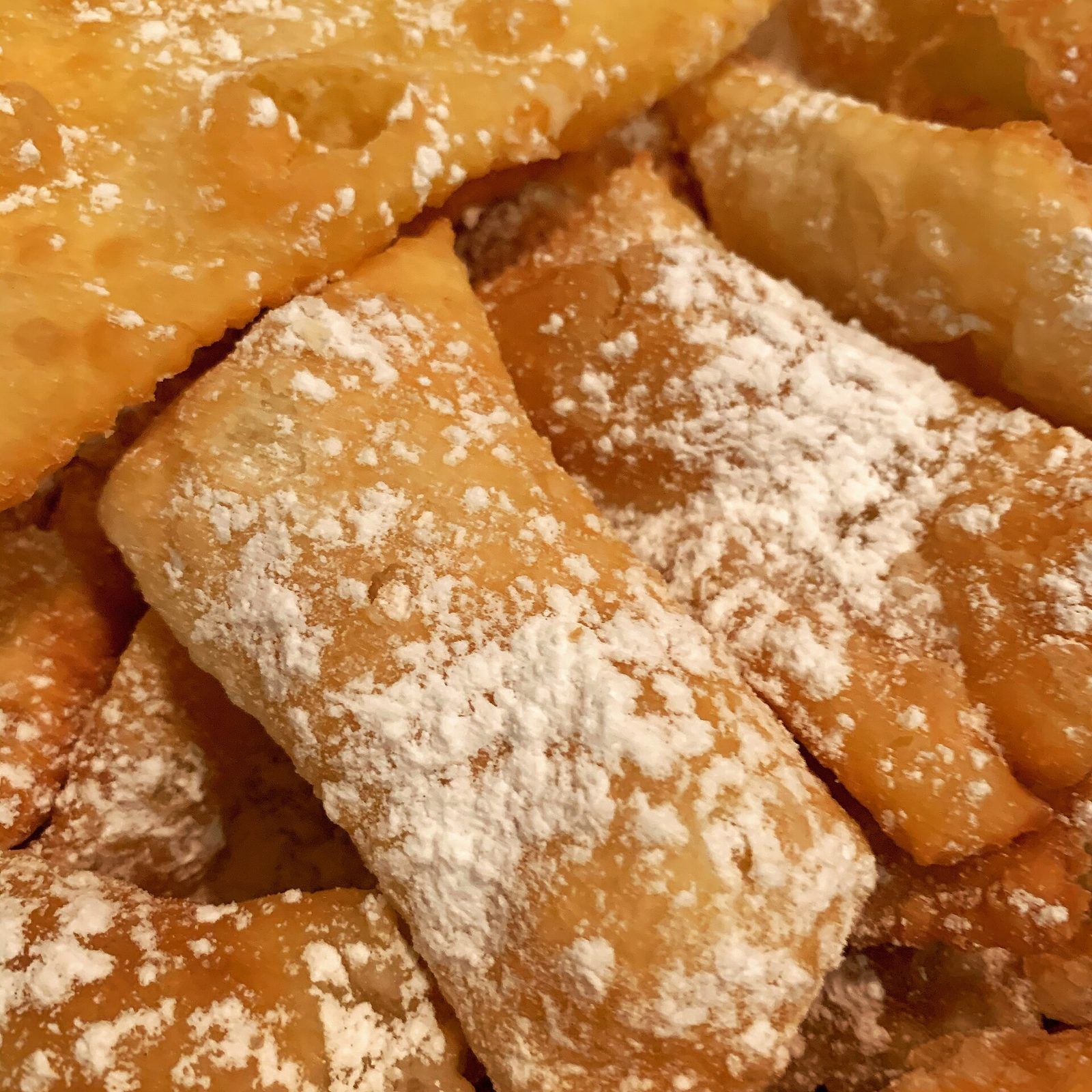
| Fried | none in the core | ganses, apple and raisin choux fritters |
| Nuts and dried fruit | the four mendicants, dates | the same, plus dried fig rolls |
| Sweets | white and black nougat, quince paste, candied fruit, calissons d’Aix | nougats, quince paste, candied fruit |
The four mendicants are figs, raisins, almonds and walnuts or hazelnuts, named after the robes of four begging orders. White nougat stands for good and black for evil.
What Nice adds
The Nice city heritage page calls the pompe à l’huile “very Provençal” and names the fougassette as the more local choice. It says the fougassette comes originally from Grasse and carries a childhood scent for many Niçois. In a France 3 report, gastronomy historian Alex Benvenuto stresses that it is not the Provençal fouasse: it is made with orange blossom water, from the bitter-orange trees grown in the area, and sits between bread and brioche. We are preparing a fougassette niçoise recipe.
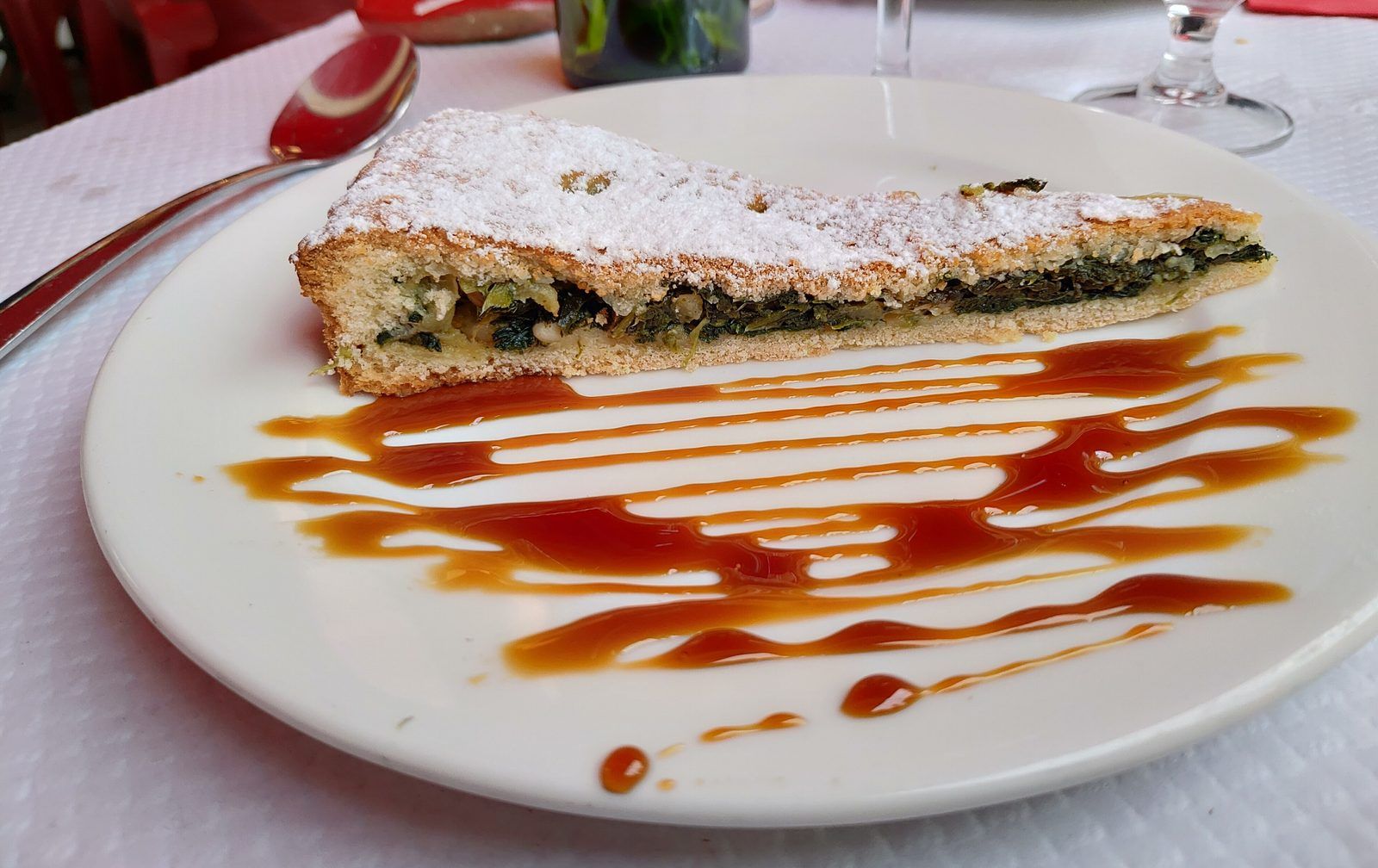
The sweet chard pie is the Niçois centrepiece. The city calls it authentically Niçois and says it is eaten at the end of meals, not only at Christmas. Ganses are a carnival sweet, yet the city counts them among the thirteen, and France 3 lists them in Nice’s core. A Nice bakery in the France 3 report also makes échaudés, squash tart, navettes and croquants for the occasion. For the wider repertoire, see our guide to Niçoise cooking.
Making pompe à l’huile
Pompe à l’huile is an olive oil fougasse, a soft sweet yeast bread scented with orange blossom, and the centrepiece of the Provençal core. Our recipe is a synthesis of three published ones: the Aix-en-Provence tourist office, ProvenceWeb and Château Suau.
The first two use no eggs, so ours has none. The Aix recipe flavours the dough with orange and lemon zest, ProvenceWeb with orange blossom water, and we use both. Château Suau adds three eggs and an egg glaze. In a Les toqués du sud video filmed in Haute-Provence, the interviewees also mention anise seeds and candied orange. ProvenceWeb cuts 5 or 7 slashes and spreads them open.
Serving the 13 desserts
Break the pompe with your hands. Cut with a knife, says the tradition, and you are ruined for the year; the gesture recalls Jesus breaking bread. In the Les toqués du sud video the pompe is dipped in vin cuit and, the next morning, in coffee. They add that it was given to neighbours and that bakers offered it to their best customers. Every family builds its own plate, and the only requirement in the France 3 report is gourmandise.
Questions & answers
Do you have to taste all thirteen desserts?
Tradition says yes. ProvenceWeb notes that each guest should taste all thirteen to ensure a prosperous year, and that the table stays set for three days, from 24 to 26 December.
How long does pompe à l'huile keep?
ProvenceWeb says up to 3 days wrapped in a cloth at room temperature. It is best the day it is baked, when it is soft and still scented with orange blossom.
Sources
- Ville de Nice, Les 13 desserts de Noël, L'atelier Cuisine Niçoise (Cultivez-vous !)
- France 3 Provence-Alpes-Côte d'Azur, Noël : Lou Ravi et la pompe à huile, vrai/faux sur les traditions à Nice
- France 3 PACA, Les treize desserts de Noël : l'élaboration de la fougassette à la fleur d'oranger, with historian Alex Benvenuto (YouTube, 2023)
- NiceRendezVous, Les 13 desserts de Noël, tradition du Comté de Nice et de Provence (2021)
- Ville d'Aix-en-Provence, Les 13 desserts
- ProvenceWeb, Les 13 desserts traditionnels du repas de Noël provençal
- Office de Tourisme d'Aix-en-Provence, La pompe à l'huile (recipe)
- ProvenceWeb, The traditional recipe for the Provençal Pompe à Huile
- Domaine de Château Suau (Delphine Pocard), La pompe à l'huile des 13 desserts
- Les toqués du sud, Les 13 desserts de la table de Noël en Provence (YouTube, 2024)
- Food Story, Découvrez les 13 desserts de Noël (YouTube, 2019)