Main dishes
Chicken in vinegar, Lyon style (poulet au vinaigre)
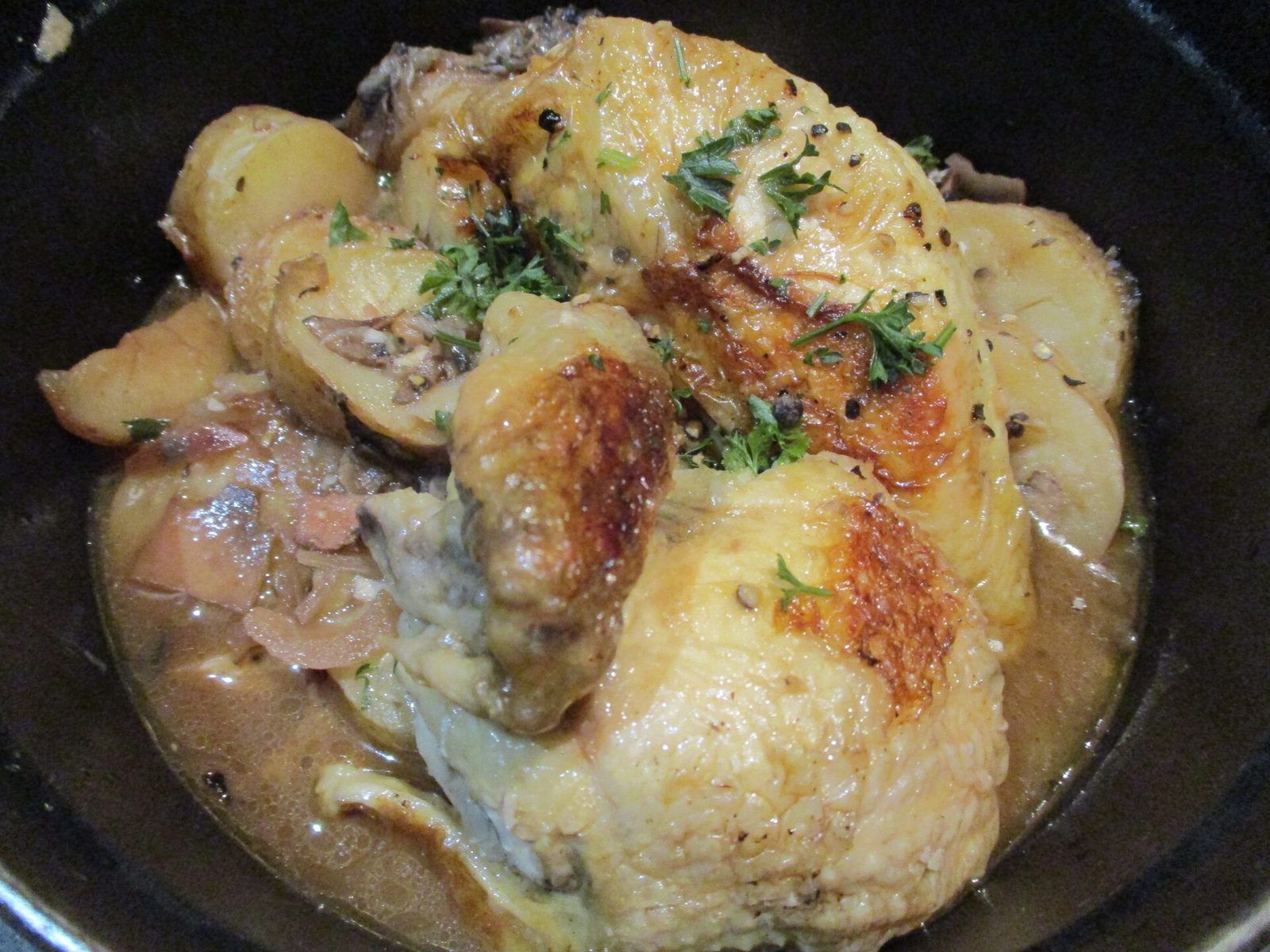
Poulet au vinaigre, the Lyon bistro classic — chicken browned in butter, deglazed with red wine vinegar and simmered with shallots and tomato into a glossy sauce.
Published · Updated
- Prep
- 15 min
- Cook
- 50 min
- Total
- 1 h 5 min
- Serves
- 4
- Difficulty
- Medium
Method
Pat the chicken pieces dry with kitchen paper and season them on all sides with salt and pepper.
Heat the butter and oil in a large sauté pan, wide enough to hold the chicken in one layer. When the butter foams, add the pieces skin side down and brown them without moving for 6–8 minutes, until deep golden. Turn and brown the other side for 3 minutes.
Lower the heat to medium, add the shallots and garlic around the chicken and cook for 2–3 minutes, stirring them in the fat, until soft but not coloured.
Pour in the vinegar, scraping the bottom of the pan. Let it bubble uncovered for 3–4 minutes, until reduced by about half and the sharp smell has softened. Do not lean over the pan — the fumes are strong.
Add the tomatoes and stock, cover and simmer gently for 25 minutes. Take out the breast pieces after 15 minutes and keep them warm, so they do not dry out.
Check that the legs are done — the juices should run clear, or 74 °C (165 °F) near the bone. Transfer all the chicken to a warm serving dish.
Remove the garlic, then boil the sauce for 3–5 minutes until it lightly coats a spoon. Stir in the cream, if using, and simmer for 1–2 minutes more. Strain the sauce if you prefer it smooth.
Off the heat, whisk in the cold butter a few pieces at a time. Taste for salt and pepper, pour the sauce over the chicken and sprinkle with the herbs.
Tips
- Use an enamelled, stainless-steel or non-stick pan. Vinegar reacts with bare cast iron and aluminium and can give the sauce a metallic taste.
- The quality of the vinegar makes the dish. A well-aged red wine vinegar is mellow; a cheap, harsh one will stay aggressive even after reducing.
- The chicken can be cooked a day ahead and reheated gently in its sauce. Whisk in the final butter only just before serving.
Watch it being made

Chicken in vinegar sauce Bocuse style — French Cooking Academy (YouTube). The player loads only when you press play.
A dish from Lyon, not Nice
Poulet au vinaigre does not come from Nice, and we will not pretend otherwise. It is a classic of Lyon — a city famous for its cooking, for its small traditional bistros known as bouchons and for the poultry of nearby Bresse — and of the surrounding region. The dish appears on bistro menus and in home kitchens there in many versions, and it is often associated with the great Lyonnais chefs of the twentieth century — versions of it are commonly credited to the repertoire of Fernand Point and Paul Bocuse, though, as with many bistro dishes, its exact origins are hard to pin down.
We cook it in our Nice kitchen because it is simple, quick and deeply satisfying, and because it shows how much a French cook can do with a few ingredients: a good chicken, butter, shallots and a bottle of vinegar.
How it works
The idea may seem surprising. Vinegar is added in a generous quantity, then boiled down so that its acidity mellows and concentrates at the same time. The browned juices of the chicken dissolve into it, the shallots soften and sweeten, and the tomato adds colour and a gentle fruitiness. A little butter whisked in at the end rounds everything off. The result is a sauce that is bright and tangy rather than sour — a perfect counterpoint to the richness of the chicken.
Choosing the ingredients
- Chicken: a free-range or farm bird with firm flesh. Around Lyon, cooks would ideally use a Bresse chicken; any good-quality chicken works. Bone-in thighs and drumsticks are a practical alternative and stay juicy.
- Vinegar: this is not the place for a cheap bottle. A red wine vinegar aged in wood, with a round, fruity smell, gives the best result.
- Butter: unsalted, of good quality. It is both the cooking fat and the finishing touch.
Variations
Many cooks leave out the tomato for a darker, sharper sauce, or replace the stock with a little dry white wine. Tarragon, which loves both vinegar and chicken, is a classic addition. For a southern touch, add a pinch of herbes de Provence with the shallots — not traditional in Lyon, but very good.
Serving
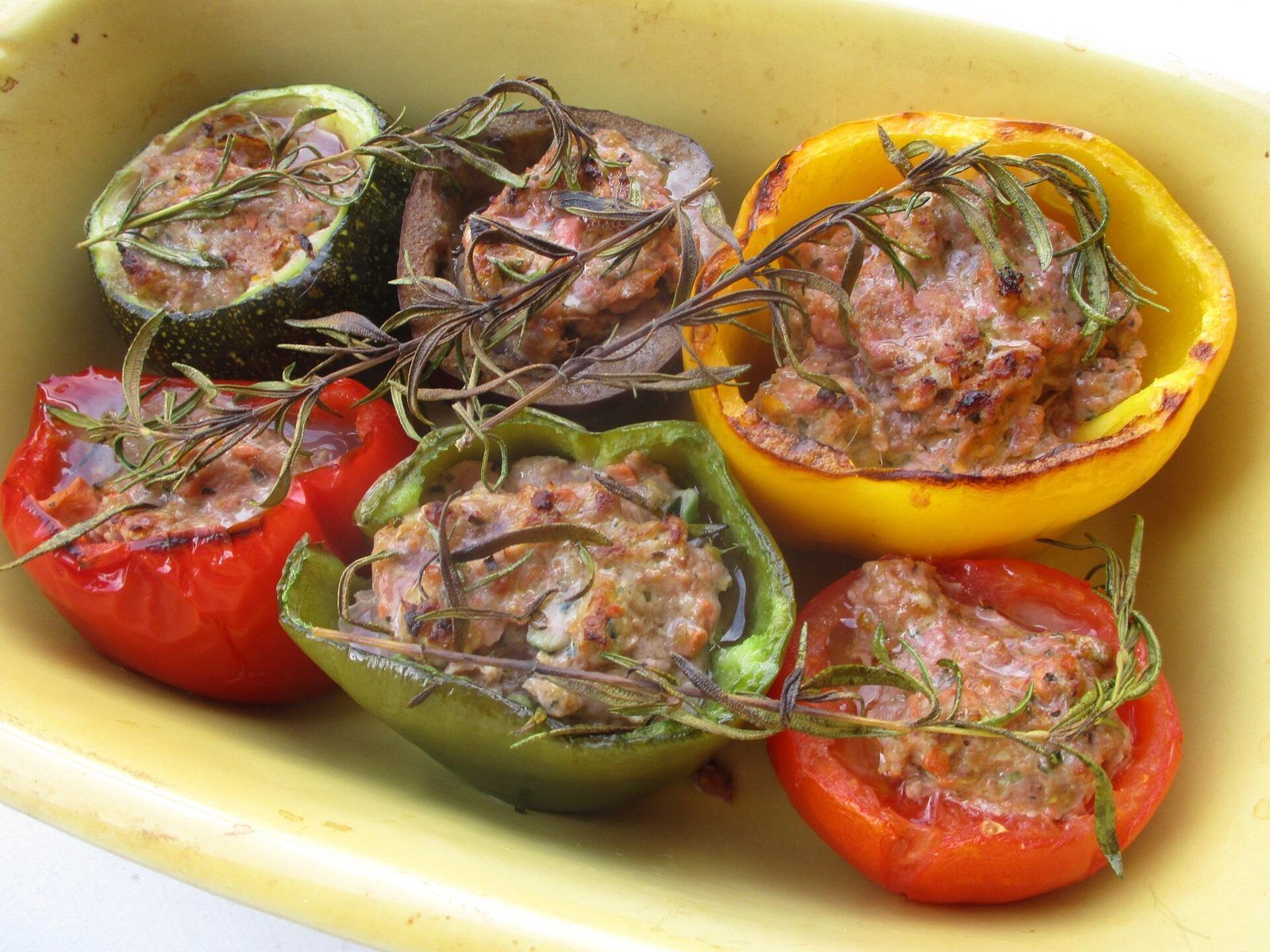
Serve the chicken straight from the pan, with plenty of sauce. Rice, fresh pasta or mashed potatoes are the usual companions. To keep a Niçoise accent on the table, start the meal with a dish of petits farcis. For wine, a light, fruity red from Beaujolais, just north of Lyon, is the natural choice.
Questions & answers
Will the dish taste too sour?
No. Reducing the vinegar drives off most of its harshness. What remains is a lively, tangy sauce, rounded by the butter, the tomato and, if you use it, the cream.
Which vinegar should I use?
A good red wine vinegar is traditional. Sherry vinegar or cider vinegar also work. Balsamic vinegar is too sweet and changes the character of the dish.
What should I serve with poulet au vinaigre?
Something to soak up the sauce — rice, fresh pasta, mashed potatoes or simply good bread — and a green salad.