Starters
Raw ham with fresh figs
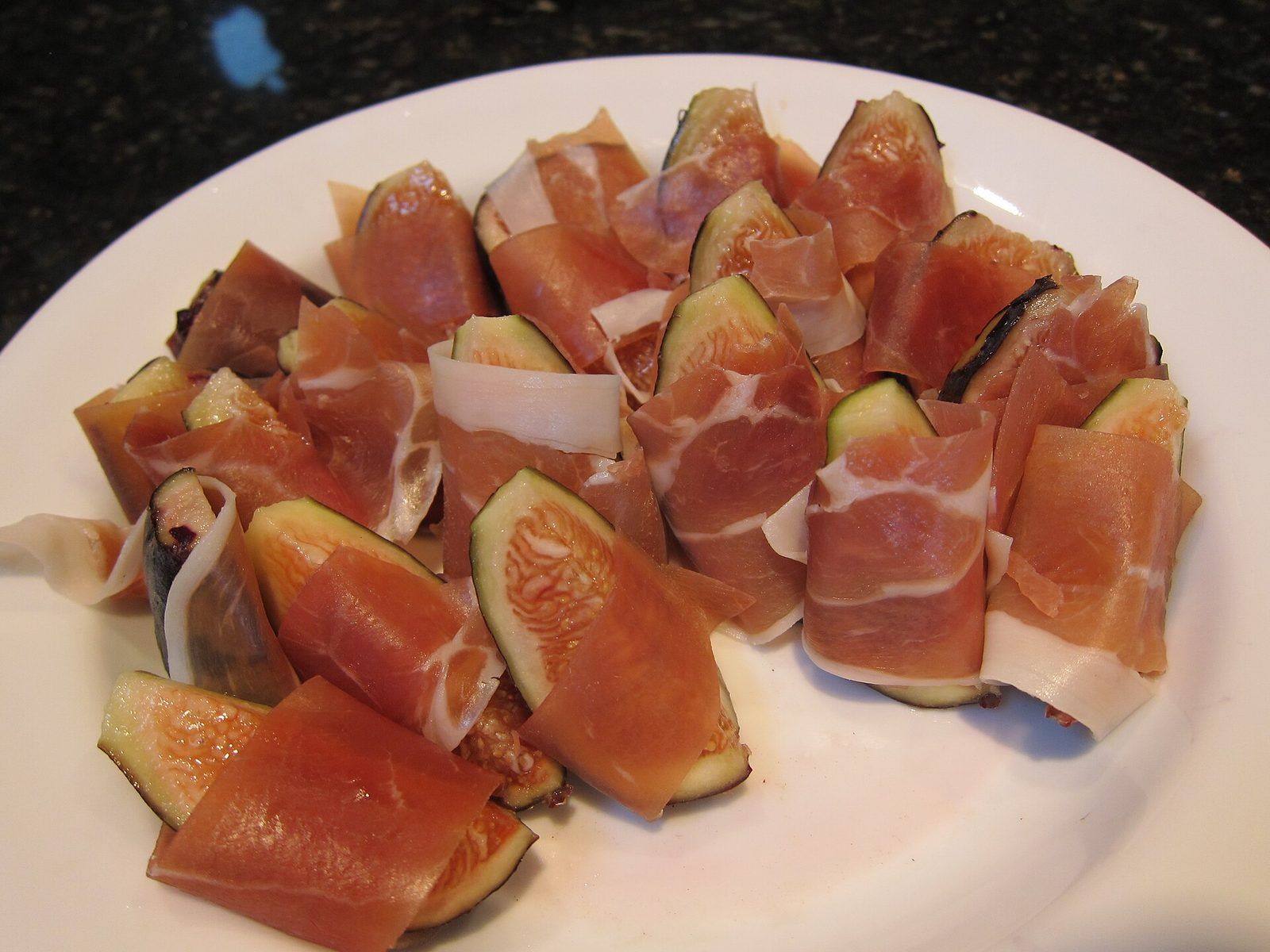
Raw ham with fresh figs, a late-summer starter from the Riviera served two ways — chilled figs with thin cured ham, or figs wrapped in ham and sage and baked.
Published · Updated
- Prep
- 15 min
- Cook
- 8 min
- Total
- 23 min
- Serves
- 4
- Difficulty
- Easy
Method
About 30 minutes before serving, put the figs in the refrigerator so they are cool but not ice-cold. Take the ham out of the refrigerator at the same time so it comes to room temperature.
Cold version: rinse and dry the figs and trim the tip of the stems. Cut each fig into quarters from the top, stopping just short of the base, so it opens like a flower.
Arrange two figs and two loosely folded slices of ham on each plate. Grind over some pepper and add a few drops of olive oil. Serve on a fig leaf if you have one.
Warm version: heat the oven to 220 °C (425 °F). Cut the figs in half lengthwise and cut each slice of ham in half.
Press a sage leaf on the cut side of each fig half, season generously with pepper, wrap in a half-slice of ham and secure with a toothpick. Place on a baking sheet lined with parchment.
Bake for 6–8 minutes, until the ham is starting to crisp at the edges and the figs are warm. Drizzle with a little olive oil and serve straight away.
Tips
- A ripe fig is soft when gently pressed, sometimes slightly wrinkled or split, and may show a drop of syrup at its base. Hard figs will not ripen much after picking.
- Slice the ham as thinly as possible, or ask for it to be sliced to order. Pre-packed ham is best laid out on a plate for a few minutes to lose its fridge chill.
- Both versions can be served together as a sharing plate with bread and a few olives.
A late-summer starter
When figs ripen in the gardens around Nice, from late summer into early autumn, there is hardly a simpler starter than this: a few sweet, soft figs next to thin slices of salty cured ham. It is the same idea as ham with melon, and in a region where summers are dry and fig trees grow almost anywhere, figs have long been a natural partner for the ham.
Cured ham has always travelled well. In the Comté de Nice it traditionally came from the mountain valleys inland, where pork was salted and air-dried to last the year, and from Italy just across the border. The dish belongs as much to Italy as to the Riviera — prosciutto e fichi is essentially the same plate.
Choosing the figs
Everything depends on the figs. Look for fruit that is soft to the touch, heavy for its size and fragrant, with skin that may be slightly wrinkled or cracked. Some fig trees give a first, larger crop in early summer (the figues-fleurs), but the main crop, and the sweetest, comes from August to October.
Purple-black varieties are the most common on market stalls in the south of France. Among them, the fig of Solliès in the Var, a violet fig often called violette de Solliès, is protected by an AOP and is one of the best known in France. Green and yellow-skinned figs are just as good when ripe. Figs do not keep: buy them for the day and handle them gently.
Choosing the ham
Use a dry-cured, unsmoked ham, sliced very thinly. A French mountain ham, jambon de Bayonne, or an Italian Parma or San Daniele all work. Thicker, rustic ham is better cut into small pieces rather than served in slices.
Cold or warm
The cold version is the classic: chilled figs opened like flowers, ham draped alongside, a grind of pepper and a thread of olive oil. The warm version is quicker than it sounds: the figs, wrapped with a sage leaf in ham, spend a few minutes in a hot oven, just long enough for the ham to crisp and the figs to turn jammy. Serve them as a starter or with an aperitif.
Serving
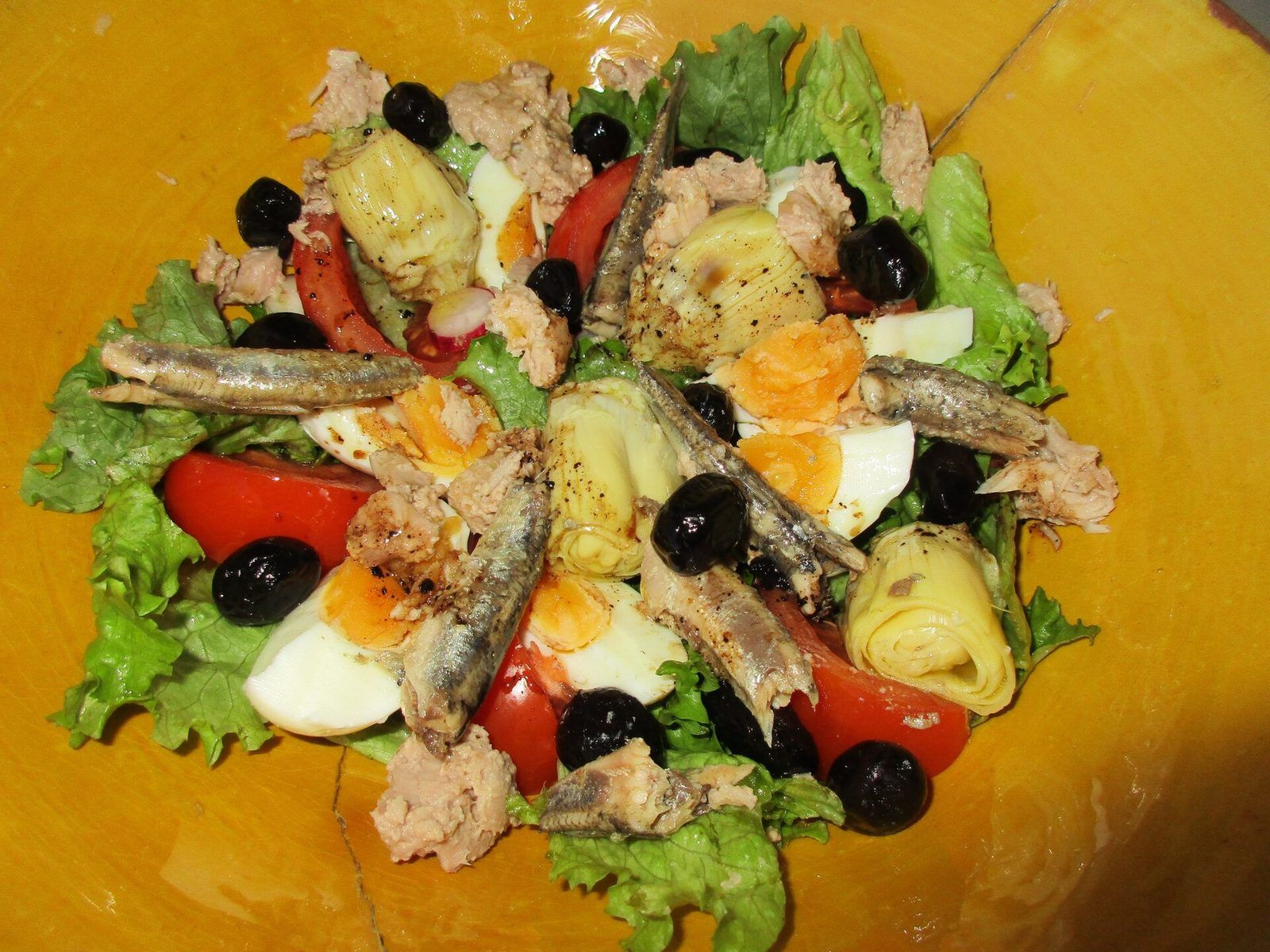
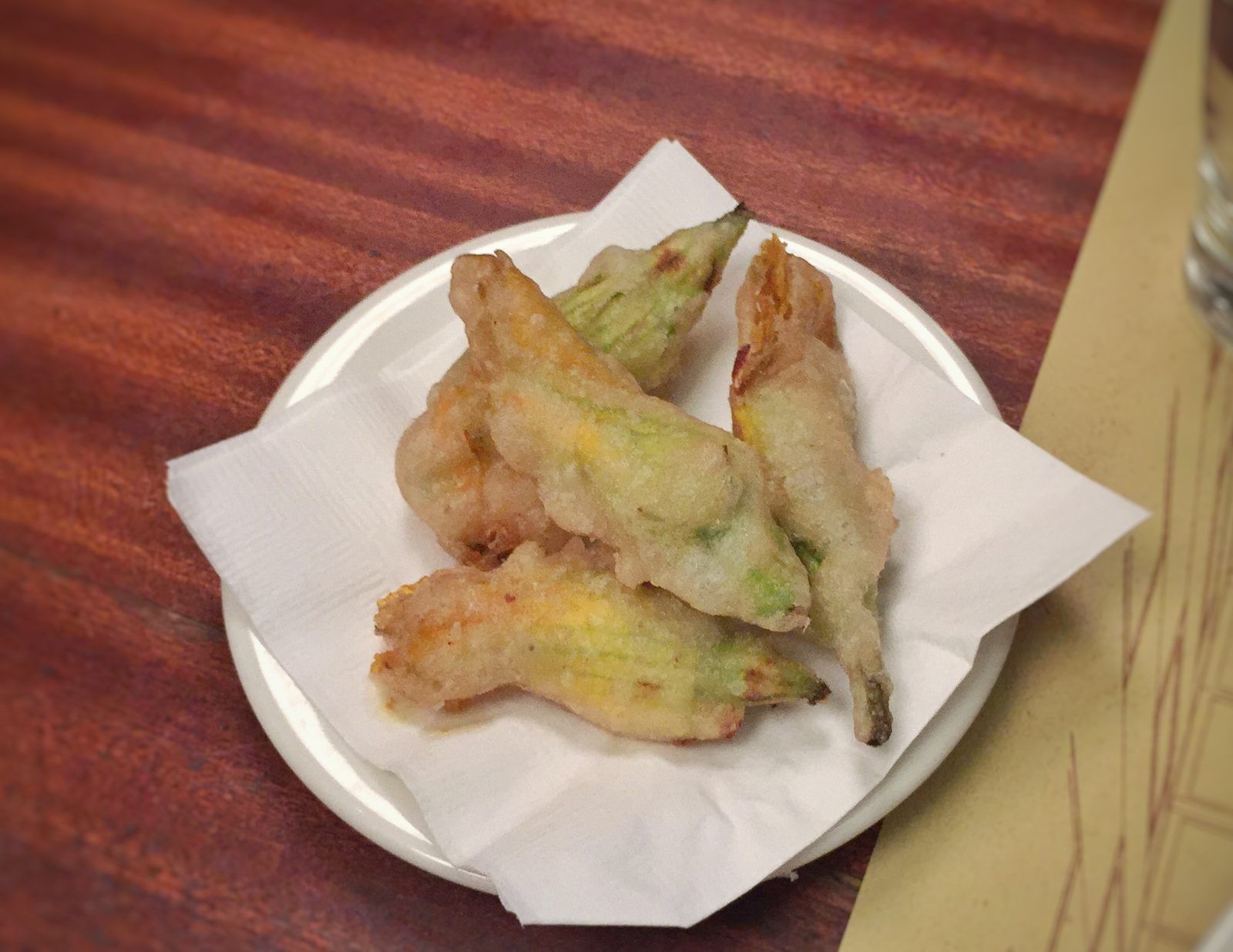
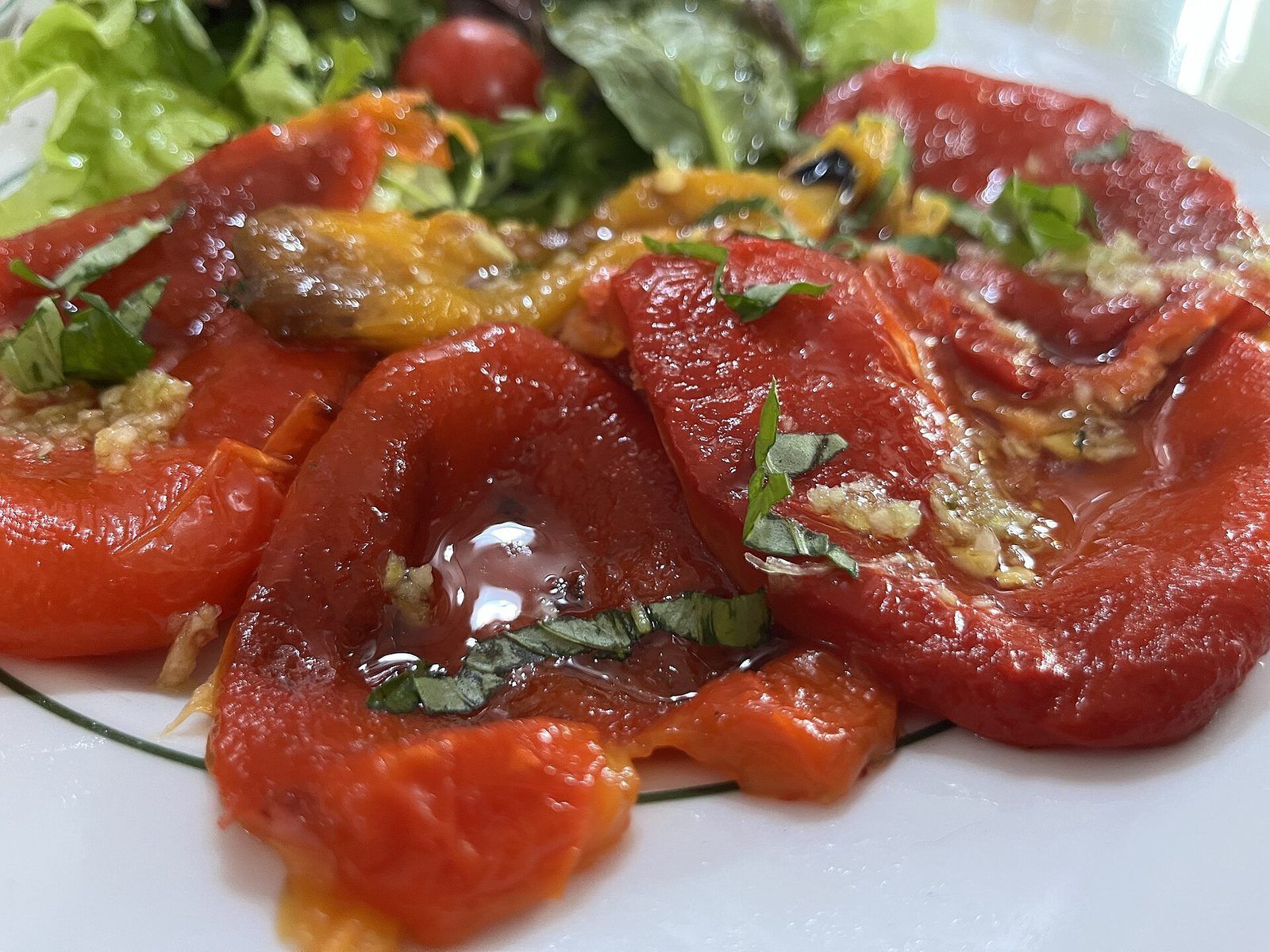
Serve with good bread and a glass of chilled rosé or a light red. The plate makes a natural opening for a summer meal, before a salade niçoise or a dish of grilled peppers, and it sits happily on the table next to a batch of zucchini blossom fritters.
Questions & answers
Which ham should I use?
Any good dry-cured ham works. In Nice, cooks might use a French mountain ham or an Italian prosciutto such as Parma or San Daniele; Bayonne ham is another good choice. Avoid smoked ham, which overwhelms the figs.
Black or green figs?
Both. Purple-black figs are usually sweeter and jammier, green figs a little fresher. The best choice is simply the ripest fig you can find.
Can I use dried figs?
Not for this dish. It depends on the juicy texture of fresh figs. Dried figs are better with cheese.